
why is my water heater squealing
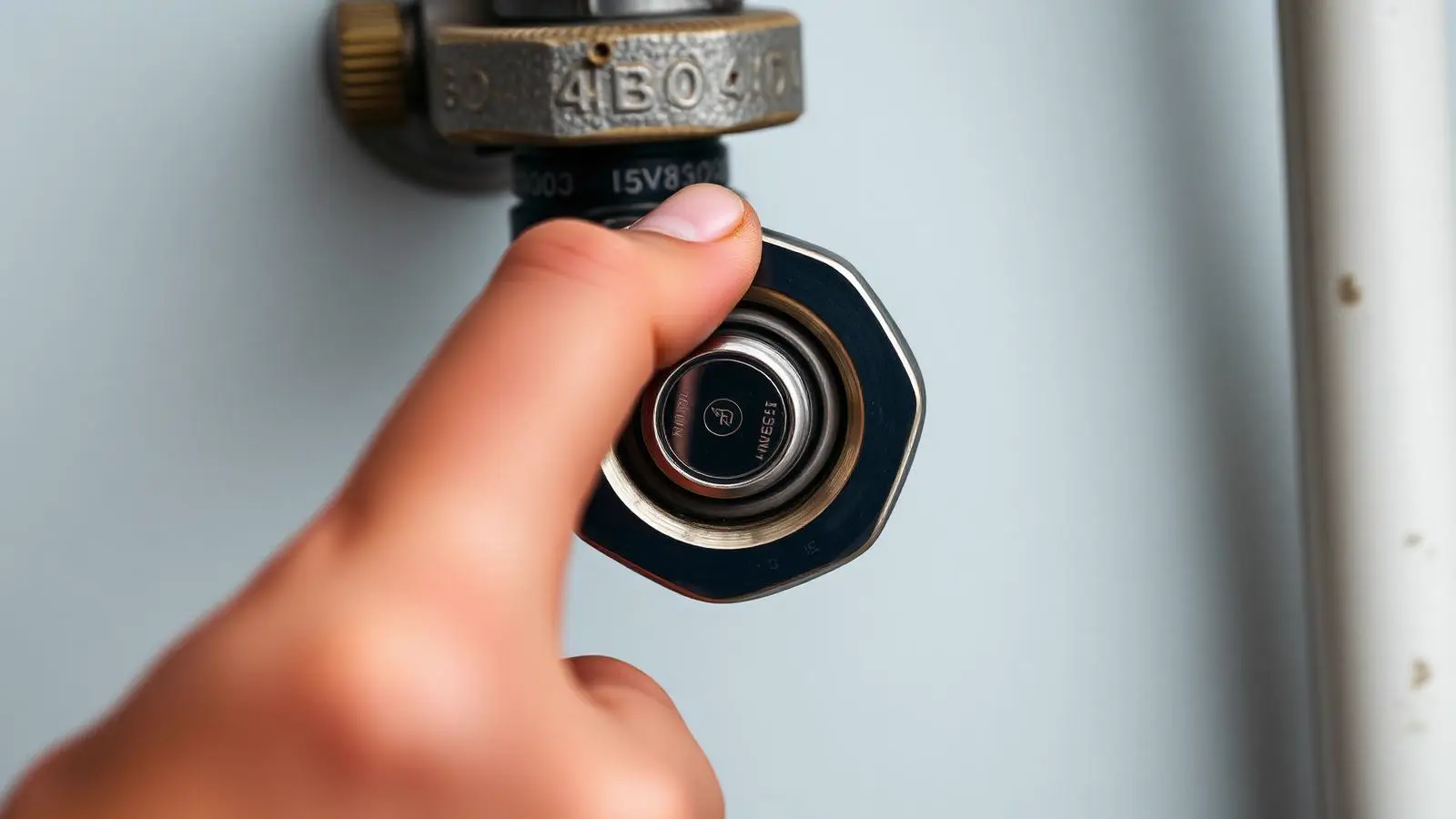
Causes, solutions and when to call a professional
Expert Answer
Squealing most often comes from a cold-water inlet valve that's throttled partway closed, worn bearings in a hot-water recirculation pump, or a waterlogged expansion tank vibrating under pressure. All three are inexpensive to diagnose.
How Serious Is This?
Usually Manageable
Monitor it and run the safe checks below before spending money.
This is the level for this problem: Usually safe to investigate.
Inspection Recommended
Have a professional look at it soon to prevent damage or failure.
Potentially Serious
Stop using the appliance and get professional help right away.
Most Likely Causes
- 1Throttled or partially closed cold-water inlet valve
- 2Failing hot-water recirculation pump bearings
- 3Waterlogged thermal expansion tank vibrating under pressure
Safe Homeowner Checks
Run a hot tap and slowly turn the cold-water shutoff valve fully open while listening for the squeal to change or stop.
Takes: 3 min · Tools: None
Run a hot tap and slowly turn the cold-water shutoff valve fully open while listening for the squeal to change or stop.
Expect: Squeal stops or clearly softens once the valve is fully open.
What it means: Confirms the valve was throttled and causing the noise.
Next step: Leave the valve fully open; replace an older gate valve with a ball valve if it won't hold fully open.
Locate the recirculation pump and listen directly at the housing during its next activation cycle (many run on a timer or a demand button) to confirm the squeal originates there.
Takes: 5 min · Tools: Flashlight
Locate the recirculation pump and listen directly at the housing during its next activation cycle (many run on a timer or a demand button) to confirm the squeal originates there.
Expect: Squeal is clearly loudest at the pump housing and coincides with pump startup.
What it means: Confirms worn pump bearings or a failing motor rather than a tank or valve issue.
Next step: Schedule pump cartridge replacement or full pump service.
Tap the top and bottom of the expansion tank with a knuckle; a properly charged tank sounds hollow on top and solid on bottom, while a waterlogged tank sounds solid throughout.
Takes: 3 min · Tools: None
Tap the top and bottom of the expansion tank with a knuckle; a properly charged tank sounds hollow on top and solid on bottom, while a waterlogged tank sounds solid throughout.
Expect: Hollow sound in the top third, solid sound in the bottom two-thirds.
What it means: A uniformly solid sound throughout confirms the tank is waterlogged.
Next step: Have the expansion tank recharged with air or replaced if the bladder has failed.
Need Help With a Water Heater Squealing?
A qualified licensed plumber can confirm the cause on site, check the safety controls, and quote the repair before the problem gets more expensive.
Fast Request • Local Matching • No Obligation
Squealing sits between a whistle and a mechanical grinding sound, and it usually comes from one of three places: a valve deliberately or accidentally left partly closed, a pump motor with worn bearings, or an expansion tank that has lost its air charge. Working through these three in order finds the source quickly.
Every likely cause, ranked
- #1
Throttled or partially closed cold-water inlet valve
Most common causeA gate or ball valve on the inlet that's not fully open squeezes the water column through a narrow gap. At higher pressures or flow rates that gap can produce a higher, more piercing squeal than a simple whistle, especially through an older-style gate valve.
This is the cheapest and quickest cause to rule out, and it's especially common after any recent valve service or a partial flush where the valve wasn't fully reopened.
Exact symptoms
- Squeal present whenever hot water is drawn anywhere in the house
- Sound changes pitch or volume as the valve handle is turned
- Valve is an older gate-style valve rather than a quarter-turn ball valve
Self-test (3 min) — tools: None
Run a hot tap and slowly turn the cold-water shutoff valve fully open while listening for the squeal to change or stop.
Expect: Squeal stops or clearly softens once the valve is fully open.
What it means: Confirms the valve was throttled and causing the noise.
Next step: Leave the valve fully open; replace an older gate valve with a ball valve if it won't hold fully open.
DIY-eligible · DIY $0–$25 · Pro $120–$220 · 15–45 minutes
- #2
Failing hot-water recirculation pump bearings
A recirculation pump keeps hot water moving through the loop so it's available faster at fixtures. As its motor bearings wear or lubricant dries out, they produce a rising squeal, often worse when the pump first kicks on.
Only applicable if a recirculation system is installed, and it's identified because the squeal is tied to the pump's own schedule or the moment it activates, not to fixture use or the tank's heating cycle.
Exact symptoms
- Squeal is loudest right as the pump kicks on, then may settle or continue
- Sound is localized at the pump body, away from the tank itself
- Squeal occurs on a schedule or continuously, unrelated to any fixture being used
Self-test (5 min) — tools: Flashlight
Locate the recirculation pump and listen directly at the housing during its next activation cycle (many run on a timer or a demand button) to confirm the squeal originates there.
Expect: Squeal is clearly loudest at the pump housing and coincides with pump startup.
What it means: Confirms worn pump bearings or a failing motor rather than a tank or valve issue.
Next step: Schedule pump cartridge replacement or full pump service.
Professional repair · DIY Diagnosis only · Pro $200–$450 · 1–2 hours
- #3
Waterlogged thermal expansion tank vibrating under pressure
An expansion tank has an internal bladder holding a cushion of compressed air. Once that bladder fails or the air charge leaks out, the tank fills entirely with water and can no longer absorb pressure pulses, sometimes producing a squeal or shudder as pressure fluctuates against the rigid, waterlogged tank.
More likely on systems where the expansion tank is more than five years old and hasn't been checked, and the squeal here tends to correlate with pressure spikes during heating cycles rather than fixture use.
Exact symptoms
- Squeal or shudder near the expansion tank, timed with heating cycles
- Tank feels heavy and doesn't sound hollow when tapped (should sound hollow on top when properly charged)
- House static pressure runs higher than expected, above 80 psi
Self-test (3 min) — tools: None
Tap the top and bottom of the expansion tank with a knuckle; a properly charged tank sounds hollow on top and solid on bottom, while a waterlogged tank sounds solid throughout.
Expect: Hollow sound in the top third, solid sound in the bottom two-thirds.
What it means: A uniformly solid sound throughout confirms the tank is waterlogged.
Next step: Have the expansion tank recharged with air or replaced if the bladder has failed.
Professional repair · DIY Diagnosis only · Pro $175–$400 · 1 hour
Symptom-to-cause table
Match what you can see, hear or smell to the cause it points at, and the safe next step for that reading.
Squeal present whenever hot water is drawn anywhere in the house
Likely cause: Throttled or partially closed cold-water inlet valve
Who should handle it: Homeowner, then licensed plumber
Next step: Leave the valve fully open; replace an older gate valve with a ball valve if it won't hold fully open.
Squeal is loudest right as the pump kicks on, then may settle or continue
Likely cause: Failing hot-water recirculation pump bearings
Who should handle it: licensed plumber
Next step: Schedule pump cartridge replacement or full pump service.
Squeal or shudder near the expansion tank, timed with heating cycles
Likely cause: Waterlogged thermal expansion tank vibrating under pressure
Who should handle it: licensed plumber
Next step: Have the expansion tank recharged with air or replaced if the bladder has failed.
Ten-minute homeowner checklist
- Run a hot tap and slowly turn the cold-water shutoff valve fully open while listening for the squeal to change or stop. (3 min · None)
- Locate the recirculation pump and listen directly at the housing during its next activation cycle (many run on a timer or a demand button) to confirm the squeal originates there. (5 min · Flashlight)
- Tap the top and bottom of the expansion tank with a knuckle; a properly charged tank sounds hollow on top and solid on bottom, while a waterlogged tank sounds solid throughout. (3 min · None)
Never open an electrical panel, relight a burner you can smell gas near, or drain a tank that is scalding hot. Stop and call a licensed plumber instead.
What this costs to fix
| Cause | DIY cost | Professional cost | Typical time | Who should repair |
|---|---|---|---|---|
| Throttled inlet valve | $0–$25 | $120–$220 | 15–45 minutes | Homeowner or licensed plumber |
| Failing recirculation pump bearings | Not DIY | $200–$450 | 1–2 hours | Licensed plumber |
| Waterlogged expansion tank | Not DIY | $175–$400 | 1 hour | Licensed plumber |
Throttled inlet valve
DIY cost: $0–$25
Professional cost: $120–$220
Typical time: 15–45 minutes
Who should repair: Homeowner or licensed plumber
Failing recirculation pump bearings
DIY cost: Not DIY
Professional cost: $200–$450
Typical time: 1–2 hours
Who should repair: Licensed plumber
Waterlogged expansion tank
DIY cost: Not DIY
Professional cost: $175–$400
Typical time: 1 hour
Who should repair: Licensed plumber
Possible solutions you can do safely
- Fully open the cold-water inlet valve as the first, fastest check.
- Replace an older gate valve with a quarter-turn ball valve if it won't hold fully open.
- Tap the expansion tank to check for a hollow top, which indicates a healthy air charge.
- Note whether the squeal is tied to a recirculation pump's schedule versus fixture use.
Fixes that usually waste money
- Replacing the water heater itself over a squeal traced to a valve, pump, or expansion tank.
- Ignoring a waterlogged expansion tank — it stops protecting the system from pressure spikes, which shortens the life of the T&P valve and fittings.
- Repeatedly re-tightening a recirculation pump's mounting instead of addressing worn internal bearings.
When to Call a Professional
- The squeal persists after confirming the inlet valve is fully open.
- A recirculation pump is confirmed as the source and needs bearing or cartridge replacement.
- An expansion tank taps solid throughout, indicating a failed bladder.
- House static pressure reads above 80 psi alongside the squeal.
Related Home Problems
These water heater symptoms often show up with the one on this page.
why is my water heater whistling
Points at the same part of the system — both problems involve the partially.
Noises Usually safe to investigate
why is my water heater making a high pitched noise
Points at the same part of the system — both problems involve the valve.
Noises Usually safe to investigate
why is my water heater humming
Points at the same part of the system — both problems involve the heating.
Noises Usually safe to investigate
why is my water heater making a humming noise
Points at the same part of the system — both problems involve the heating.
Noises Usually safe to investigate
why is my water heater vibrating
Points at the same part of the system — both problems involve the waterlogged.
Noises Usually safe to investigate
Still not sure what you are hearing or seeing? Browse the noises guides or the full water heater guide index with repair-cost ranges.
Frequently Asked Questions
What's the difference between squealing and whistling?
They share the same flow-restriction physics, but squealing is often higher-pitched and more piercing, and is more commonly associated with mechanical components like pump bearings or a rigid, waterlogged expansion tank in addition to valve restrictions.
Do I need a recirculation pump for my water heater to squeal?
No. Most squealing is caused by a partially closed inlet valve, which has nothing to do with a recirculation pump. A pump is only a relevant cause if your system actually has one installed, typically for faster hot water delivery to distant fixtures.
How do I know if my expansion tank has failed?
Tap it with your knuckle: the top third should sound hollow (air-filled) and the bottom two-thirds should sound solid (water-filled). If the whole tank sounds solid, the internal bladder has likely failed and it's no longer absorbing pressure changes.
Is it safe to keep using the water heater while it's squealing?
Yes, in most cases — squealing from a valve, pump, or expansion tank is a comfort and equipment-life issue, not an immediate safety hazard. The exception is a waterlogged expansion tank, which should be addressed promptly since it leaves the T&P valve absorbing pressure spikes it wasn't designed to handle alone.
Sources
- International Code Council — International Plumbing Code, Sections 606–607
- U.S. Department of Energy — Water Heater Maintenance
Ready to get this fixed?
Tell us your ZIP code and what the heater is doing. We match your request to a local licensed plumber.
Fast Request • Local Matching • No Obligation
Published 2026-08-10 · Last reviewed 2026-08-10 · Reviewed by Why Is My Water Heater? editorial team · How we research