
why is my water heater relief valve leaking
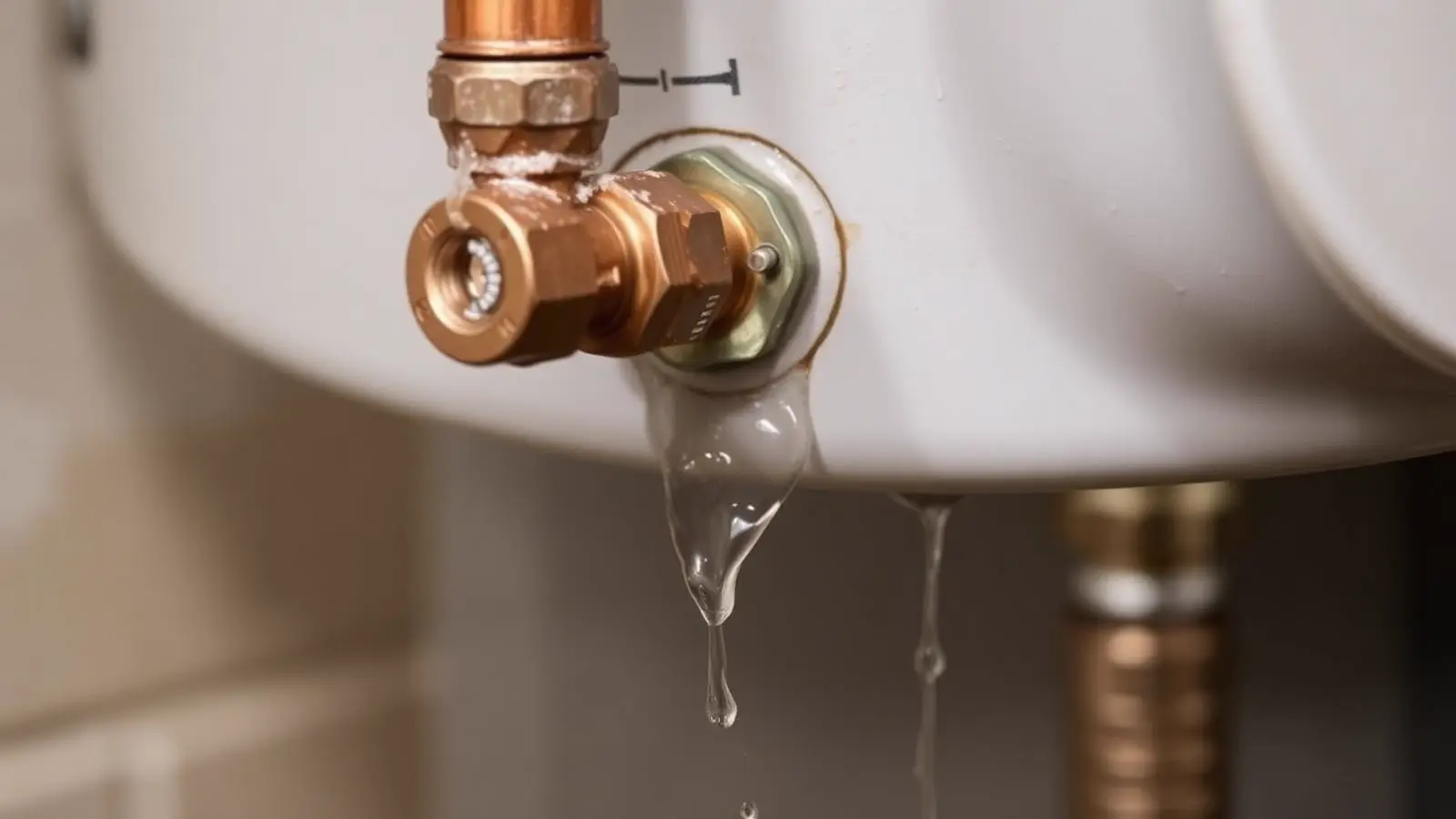
Causes, solutions and when to call a professional
Expert Answer
A slow weep from the relief valve usually means a worn seat or minor debris; a steady stream or repeated full discharge means dangerous overpressure or overheating. Distinguish the two before deciding whether to replace the valve or fix the system feeding it.
How Serious Is This?
Usually Manageable
Monitor it and run the safe checks below before spending money.
Inspection Recommended
Have a professional look at it soon to prevent damage or failure.
This is the level for this problem: Repair soon.
Potentially Serious
Stop using the appliance and get professional help right away.
Safety warning
A continuous, forceful discharge — not a slow weep — signals the tank is at or near its 150 psi / 210 °F safety limit. Do not disconnect or cap the discharge line; shut off the water heater's power/gas and cold-water supply and call a professional immediately.
Most Likely Causes
- 1Weeping seat from age or mineral buildup
- 2Overpressure discharge from thermal expansion
- 3Overheating from a stuck or miscalibrated thermostat
- 4Debris lodged in the seat after a manual test
Safe Homeowner Checks
Place a dry paper towel under the discharge outlet and check it every 30 minutes for 2 hours (or check first thing in the morning before any hot-water use).
Takes: 5 min · Tools: Paper towel, Flashlight
Place a dry paper towel under the discharge outlet and check it every 30 minutes for 2 hours (or check first thing in the morning before any hot-water use).
Expect: A small, consistent damp spot with no dripping sound and no increase over time.
What it means: Steady, unchanging light moisture with normal pressure readings points to a worn seat rather than a system problem.
Next step: Replace the valve — a $15–$30 part that resolves most weeps permanently.
Check pressure cold, then again immediately after a heating cycle using a hose-bib gauge.
Takes: 8 min · Tools: Water-pressure gauge
Check pressure cold, then again immediately after a heating cycle using a hose-bib gauge.
Expect: Pressure rise under 10 psi after heating.
What it means: A large rise confirms thermal expansion is triggering a real, intentional discharge.
Next step: Install a thermal expansion tank sized for your water heater's capacity.
Do not interrupt an active discharge — let the valve finish releasing pressure before inspecting it.
With extreme caution, check hot-tap temperature with a thermometer; if it reads above 140 °F, stop testing and shut the unit down.
Takes: 3 min · Tools: Kitchen thermometer
With extreme caution, check hot-tap temperature with a thermometer; if it reads above 140 °F, stop testing and shut the unit down.
Expect: Hot water at 120 °F.
What it means: Readings above 140 °F with an actively discharging valve indicate a thermostat or element control failure, not a routine pressure issue.
Next step: Shut off power (electric) or turn the gas control to OFF, close the cold-water supply, and call a technician.
Overheated water above 140 °F causes third-degree burns in under 5 seconds; do not run more hot-tap tests than necessary.
Lift and release the test lever two or three times in quick succession to clear the seat, then dry and monitor the outlet for 10 minutes.
Takes: 10 min · Tools: Bucket, Towel
Lift and release the test lever two or three times in quick succession to clear the seat, then dry and monitor the outlet for 10 minutes.
Expect: Weep stops after re-seating.
What it means: If it clears, debris was the cause; if not, the seat itself is worn.
Next step: No repair needed if it clears; otherwise replace the valve.
'Leaking' from a relief valve covers two very different situations. A weep is a few drops finding their way past a worn or debris-fouled seat with no real pressure problem. A discharge is the valve doing exactly what it's built for — releasing dangerous pressure or temperature. Telling these apart changes whether you need a $20 valve or a professional pressure diagnosis today.
Every likely cause, ranked
- #1
Weeping seat from age or mineral buildup
Most common causeThe rubber or composite seat inside the valve degrades over years of intermittent contact with hot, mineral-laden water. Small deposits or a slightly hardened seat prevent a bone-dry seal even when system pressure is completely normal.
Most relief-valve complaints on heaters over 5 years old are a slow weep, not an active discharge, and the system pressure checks out fine.
Exact symptoms
- A few drops at the discharge pipe outlet, not a stream
- No correlation with heating cycles or time of day
- Valve is original and 5+ years old
Self-test (5 min) — tools: Paper towel, Flashlight
Place a dry paper towel under the discharge outlet and check it every 30 minutes for 2 hours (or check first thing in the morning before any hot-water use).
Expect: A small, consistent damp spot with no dripping sound and no increase over time.
What it means: Steady, unchanging light moisture with normal pressure readings points to a worn seat rather than a system problem.
Next step: Replace the valve — a $15–$30 part that resolves most weeps permanently.
DIY-eligible · DIY $15–$30 · Pro $150–$300 · 45–60 minutes
- #2
Overpressure discharge from thermal expansion
In a closed plumbing system (check valve or PRV at the meter), water expanding as it heats has no outlet except the relief valve, which opens once pressure nears 150 psi.
This is the leading cause of a valve that actively discharges — as opposed to weeps — rather than just drips.
Exact symptoms
- Discharge happens predictably after long hot-water use or a full heating cycle
- A rushing or hissing sound accompanies the release
- Pressure gauge shows a jump of 15+ psi after heating
Self-test (8 min) — tools: Water-pressure gauge
Check pressure cold, then again immediately after a heating cycle using a hose-bib gauge.
Expect: Pressure rise under 10 psi after heating.
What it means: A large rise confirms thermal expansion is triggering a real, intentional discharge.
Next step: Install a thermal expansion tank sized for your water heater's capacity.
Do not interrupt an active discharge — let the valve finish releasing pressure before inspecting it.
Professional repair · DIY $15 gauge · Pro $150–$350 · 1 hour
- #3
Overheating from a stuck or miscalibrated thermostat
If a thermostat sticks closed or a heating element's control fails, the tank can climb past 180–210 °F, at which point the valve's temperature-sensing element forces it open regardless of pressure.
Less common than pressure-driven discharge but far more serious, since it indicates the primary temperature control has already failed.
Exact symptoms
- Water at the tap is dangerously hot, near scalding
- Discharge is forceful and repeats even after the tank has been drained partway
- Popping or rumbling from sediment superheating at the tank bottom
Self-test (3 min) — tools: Kitchen thermometer
With extreme caution, check hot-tap temperature with a thermometer; if it reads above 140 °F, stop testing and shut the unit down.
Expect: Hot water at 120 °F.
What it means: Readings above 140 °F with an actively discharging valve indicate a thermostat or element control failure, not a routine pressure issue.
Next step: Shut off power (electric) or turn the gas control to OFF, close the cold-water supply, and call a technician.
Overheated water above 140 °F causes third-degree burns in under 5 seconds; do not run more hot-tap tests than necessary.
Professional repair · DIY Not DIY · Pro $150–$400 for thermostat/element replacement · 1–2 hours
- #4
Debris lodged in the seat after a manual test
Lifting the test lever flushes a burst of tank water past the seat; loose sediment can catch on the way back down, holding the valve open a crack.
A frequent, avoidable cause right after someone tests the valve or after a tank flush stirs up sediment.
Exact symptoms
- Weep began right after the test lever was used
- Tank was recently flushed
- No change in pressure or temperature readings
Self-test (10 min) — tools: Bucket, Towel
Lift and release the test lever two or three times in quick succession to clear the seat, then dry and monitor the outlet for 10 minutes.
Expect: Weep stops after re-seating.
What it means: If it clears, debris was the cause; if not, the seat itself is worn.
Next step: No repair needed if it clears; otherwise replace the valve.
DIY-eligible · DIY $0 · Pro $0 · 10 minutes
Symptom-to-cause table
Match what you can see, hear or smell to the cause it points at, and the safe next step for that reading.
A few drops at the discharge pipe outlet, not a stream
Likely cause: Weeping seat from age or mineral buildup
Who should handle it: Homeowner, then licensed plumber
Next step: Replace the valve — a $15–$30 part that resolves most weeps permanently.
Discharge happens predictably after long hot-water use or a full heating cycle
Likely cause: Overpressure discharge from thermal expansion
Who should handle it: licensed plumber
Next step: Install a thermal expansion tank sized for your water heater's capacity.
Water at the tap is dangerously hot, near scalding
Likely cause: Overheating from a stuck or miscalibrated thermostat
Who should handle it: licensed plumber
Next step: Shut off power (electric) or turn the gas control to OFF, close the cold-water supply, and call a technician.
Weep began right after the test lever was used
Likely cause: Debris lodged in the seat after a manual test
Who should handle it: Homeowner, then licensed plumber
Next step: No repair needed if it clears; otherwise replace the valve.
Ten-minute homeowner checklist
- Place a dry paper towel under the discharge outlet and check it every 30 minutes for 2 hours (or check first thing in the morning before any hot-water use). (5 min · Paper towel, Flashlight)
- Check pressure cold, then again immediately after a heating cycle using a hose-bib gauge. (8 min · Water-pressure gauge)Do not interrupt an active discharge — let the valve finish releasing pressure before inspecting it.
- With extreme caution, check hot-tap temperature with a thermometer; if it reads above 140 °F, stop testing and shut the unit down. (3 min · Kitchen thermometer)Overheated water above 140 °F causes third-degree burns in under 5 seconds; do not run more hot-tap tests than necessary.
- Lift and release the test lever two or three times in quick succession to clear the seat, then dry and monitor the outlet for 10 minutes. (10 min · Bucket, Towel)
Never open an electrical panel, relight a burner you can smell gas near, or drain a tank that is scalding hot. Stop and call a licensed plumber instead.
What this costs to fix
| Cause | DIY cost | Professional cost | Typical time | Who should repair |
|---|---|---|---|---|
| Weeping seat from age/buildup | $15–$30 | $150–$300 | 45–60 minutes | Homeowner or licensed plumber |
| Overpressure discharge (thermal expansion) | $15 gauge | $150–$350 | 1 hour | Licensed plumber |
| Overheating (thermostat/element failure) | Not DIY | $150–$400 | 1–2 hours | Water-heater technician |
| Debris after manual test | $0 | $0 | 10 minutes | Homeowner |
Weeping seat from age/buildup
DIY cost: $15–$30
Professional cost: $150–$300
Typical time: 45–60 minutes
Who should repair: Homeowner or licensed plumber
Overpressure discharge (thermal expansion)
DIY cost: $15 gauge
Professional cost: $150–$350
Typical time: 1 hour
Who should repair: Licensed plumber
Overheating (thermostat/element failure)
DIY cost: Not DIY
Professional cost: $150–$400
Typical time: 1–2 hours
Who should repair: Water-heater technician
Debris after manual test
DIY cost: $0
Professional cost: $0
Typical time: 10 minutes
Who should repair: Homeowner
Possible solutions you can do safely
- Cycle the test lever a couple of times to clear debris after a flush.
- Check static and post-heating pressure with a $15 gauge before assuming the valve is bad.
- Replace a weeping valve yourself once pressure and temperature both test normal.
Fixes that usually waste money
- Treating an active, forceful discharge the same as a slow weep — a discharge needs the pressure or thermostat cause fixed, not just a new valve.
- Buying a second expansion tank instead of confirming the first is properly precharged (30–50 psi air side, matched to system pressure).
- Ignoring a discharge because 'it stopped on its own' — recurring discharges mean the underlying cause is still active.
When to Call a Professional
- The valve is actively discharging a stream, not weeping drops.
- Hot water at the tap tests above 130–140 °F.
- Discharge recurs multiple times per week.
- You've confirmed normal pressure and temperature but the valve still leaks after replacement.
Related Home Problems
These water heater symptoms often show up with the one on this page.
why is my water heater pressure relief valve leaking
Points at the same part of the system — both problems involve the thermal.
Leaks & Water Pressure Repair soon
why is my water heater leaking from the pressure valve
Points at the same part of the system — both problems involve the discharge.
Leaks & Water Pressure Repair soon
why is my water heater overflowing
Points at the same part of the system — both problems involve the stuck.
Leaks & Water Pressure Dangerous — act now
why is my water heater leaking from the overflow pipe
Points at the same part of the system — both problems involve the valve.
Leaks & Water Pressure Repair soon
why is my water heater not heating
Points at the same part of the system — both problems involve the heating.
No Hot Water & Temperature Repair soon
Still not sure what you are hearing or seeing? Browse the leaks & water pressure guides or the full water heater guide index with repair-cost ranges.
Frequently Asked Questions
What's the difference between a weeping valve and a discharging valve?
A weep is a few drops with no clear trigger and normal pressure/temperature readings — typically a worn seat. A discharge is a stream or repeated release tied to heating cycles or high pressure — the valve is actively protecting the tank from a real overpressure or overheating condition.
Should I replace the valve or fix what's causing it to open?
If pressure and temperature test normal, replace the valve. If either tests high, fix that first — a new valve on an uncorrected high-pressure or overheating system will start leaking again within days.
Can a relief valve leak without anything being wrong?
Yes — seats wear out from age alone even on a perfectly maintained system. That's a straightforward $15–$30 part swap, distinct from a discharge caused by pressure or temperature problems.
Is a small drip from the relief valve an emergency?
No. A slow drip can typically wait a few days for a scheduled repair. A forceful, repeated discharge or scalding-hot water at the tap should be treated as urgent — shut the unit down and call a technician the same day.
Sources
- ANSI/CSA — ANSI Z21.22 / CSA 4.4 — Relief Valves for Hot Water Supply Systems
- American Society of Mechanical Engineers (ASME) — Temperature and Pressure Relief Valve Requirements
Published 2026-08-10 · Last reviewed 2026-08-10 · Reviewed by Why Is My Water Heater? editorial team · How we research