
why is my water heater whistling
Causes, solutions and when to call a professional
Expert Answer
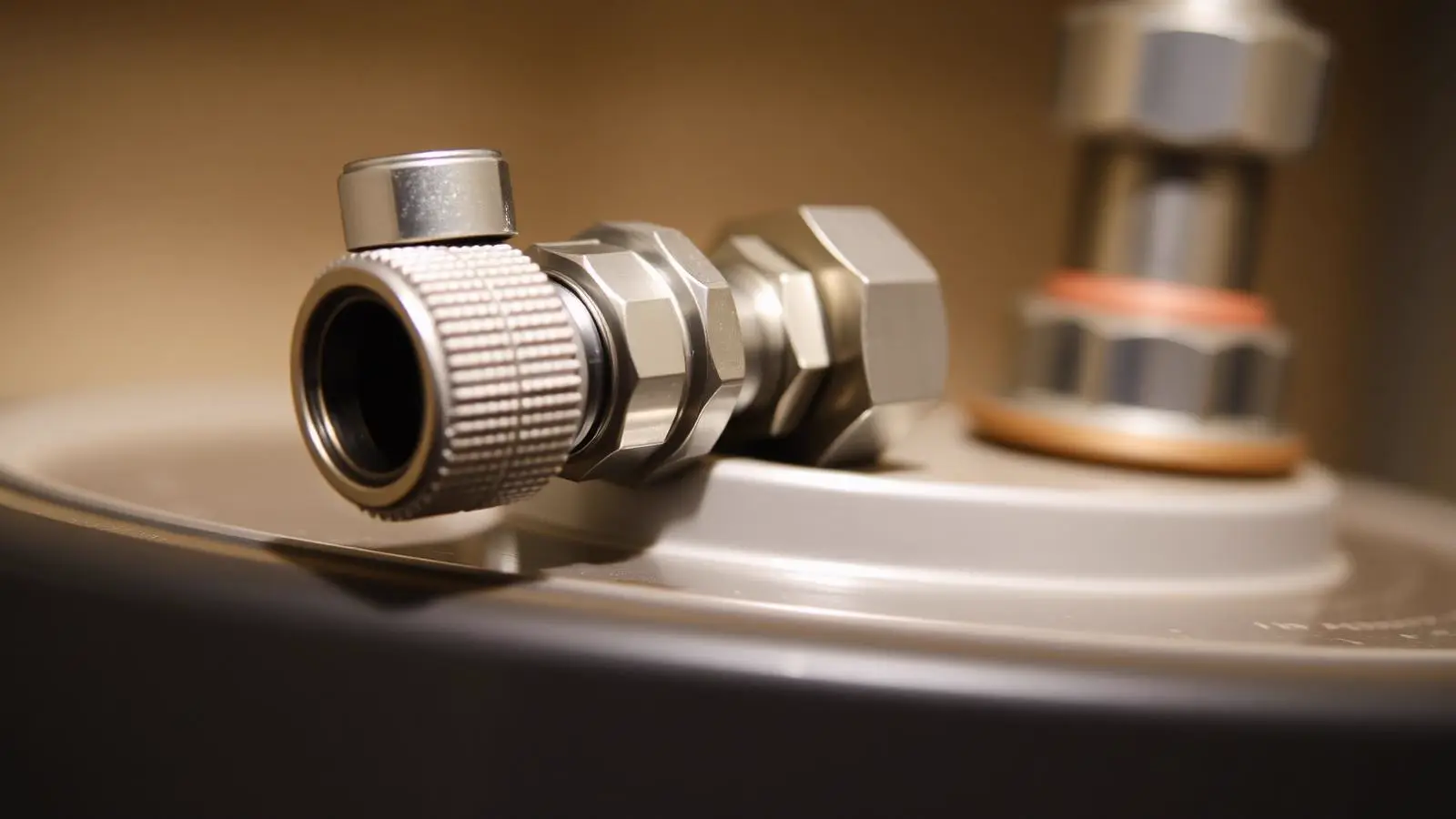
Whistling is caused by water or steam squeezing through a narrow opening — most often a partially closed shutoff valve, a restricted or scaling T&P valve, or an undersized or kinked flexible supply line.
How Serious Is This?
Usually Manageable
Monitor it and run the safe checks below before spending money.
This is the level for this problem: Usually safe to investigate.
Inspection Recommended
Have a professional look at it soon to prevent damage or failure.
Potentially Serious
Stop using the appliance and get professional help right away.
Most Likely Causes
- 1Partially closed cold-water shutoff valve
- 2Scaling or partial restriction inside the T&P relief valve
- 3Undersized, kinked, or restricted flexible supply line
Safe Homeowner Checks
Locate the cold-water shutoff valve above the heater and turn it fully counterclockwise (open) while a hot tap runs, listening for the whistle to stop.
Takes: 3 min · Tools: None
Locate the cold-water shutoff valve above the heater and turn it fully counterclockwise (open) while a hot tap runs, listening for the whistle to stop.
Expect: Whistle stops or fades noticeably once the valve is confirmed fully open.
What it means: Confirms the valve itself was the restriction.
Next step: Leave the valve fully open; replace it if it won't seat fully open or closed.
With a bucket positioned under the discharge pipe outlet, lift the T&P valve's test lever briefly to release a burst of hot water, then release it and confirm it reseats cleanly with no drip or ongoing whistle.
Takes: 3 min · Tools: Bucket
With a bucket positioned under the discharge pipe outlet, lift the T&P valve's test lever briefly to release a burst of hot water, then release it and confirm it reseats cleanly with no drip or ongoing whistle.
Expect: Valve discharges cleanly and reseats with no dripping or whistling afterward.
What it means: A valve that keeps whistling or dripping after testing likely has internal scale or a worn seat.
Next step: Replace the T&P valve; it is a low-cost, high-importance safety part.
Stand clear of the discharge outlet — released water is near tank temperature, roughly 120–140 °F.
Visually trace both flex connectors from the tank to the copper pipe, checking for any bend sharper than the connector's rated minimum radius (usually printed on the braid).
Takes: 4 min · Tools: Flashlight
Visually trace both flex connectors from the tank to the copper pipe, checking for any bend sharper than the connector's rated minimum radius (usually printed on the braid).
Expect: No sharp kinks and connector diameter matches the pipe size it connects to.
What it means: A visible kink or undersized line explains the whistle.
Next step: Replace with a properly sized, unkinked flex connector routed with a gentle bend.
Need Help With a Water Heater Whistling?
A qualified licensed plumber can confirm the cause on site, check the safety controls, and quote the repair before the problem gets more expensive.
Fast Request • Local Matching • No Obligation
A whistle is a flow-restriction sound: water is being forced through an opening narrower than it should be, and the pitch rises with pressure and flow rate. Unlike hissing, whistling almost never signals a gas issue — it points to something mechanical in the water path.
Every likely cause, ranked
- #1
Partially closed cold-water shutoff valve
Most common causeA gate or ball valve on the cold-water inlet that isn't fully open creates a narrow gap. Water forced through that gap at line pressure vibrates the valve internals and produces a steady whistle.
The single most common cause, especially right after any plumbing work, a flush, or maintenance where the valve was closed and not fully reopened.
Exact symptoms
- Whistle is present whenever hot water is running anywhere in the house
- Pitch changes noticeably as you turn the valve handle
- Started right after a flush, repair, or valve replacement
Self-test (3 min) — tools: None
Locate the cold-water shutoff valve above the heater and turn it fully counterclockwise (open) while a hot tap runs, listening for the whistle to stop.
Expect: Whistle stops or fades noticeably once the valve is confirmed fully open.
What it means: Confirms the valve itself was the restriction.
Next step: Leave the valve fully open; replace it if it won't seat fully open or closed.
DIY-eligible · DIY $0–$25 for a replacement ball valve if needed · Pro $120–$220 · 15–45 minutes
- #2
Scaling or partial restriction inside the T&P relief valve
Mineral scale can build up inside the T&P valve's internal passage over years of never being tested. A narrowed opening lets water or steam whistle through as the valve nears its opening pressure, even without fully discharging.
More likely on hard water and on valves that have never been manually tested, since scale accumulates gradually inside a valve that rarely moves.
Exact symptoms
- Faint, intermittent whistle localized at the top of the tank near the valve
- Whistle tends to appear near the end of a heating cycle
- Valve has not been manually tested in over a year
Self-test (3 min) — tools: Bucket
With a bucket positioned under the discharge pipe outlet, lift the T&P valve's test lever briefly to release a burst of hot water, then release it and confirm it reseats cleanly with no drip or ongoing whistle.
Expect: Valve discharges cleanly and reseats with no dripping or whistling afterward.
What it means: A valve that keeps whistling or dripping after testing likely has internal scale or a worn seat.
Next step: Replace the T&P valve; it is a low-cost, high-importance safety part.
Stand clear of the discharge outlet — released water is near tank temperature, roughly 120–140 °F.
Professional repair · DIY $15–$30 part cost if a plumber supplies it · Pro $150–$280 · 30–45 minutes
- #3
Undersized, kinked, or restricted flexible supply line
Braided flex connectors have a smaller internal diameter than rigid pipe, and a kink, sharp bend, or manufacturing defect narrows that diameter further, forcing water through at higher velocity and creating a whistle.
Common after a DIY connector replacement using an undersized line, or when a connector was bent sharply to fit a tight space.
Exact symptoms
- Whistle localized to the flex connector at the top of the tank
- Visible kink or tight bend in the connector
- Whistle intensity tracks directly with flow rate — louder at full blast, quieter at a trickle
Self-test (4 min) — tools: Flashlight
Visually trace both flex connectors from the tank to the copper pipe, checking for any bend sharper than the connector's rated minimum radius (usually printed on the braid).
Expect: No sharp kinks and connector diameter matches the pipe size it connects to.
What it means: A visible kink or undersized line explains the whistle.
Next step: Replace with a properly sized, unkinked flex connector routed with a gentle bend.
DIY-eligible · DIY $12–$35 · Pro $130–$220 · 30–45 minutes
Symptom-to-cause table
Match what you can see, hear or smell to the cause it points at, and the safe next step for that reading.
Whistle is present whenever hot water is running anywhere in the house
Likely cause: Partially closed cold-water shutoff valve
Who should handle it: Homeowner, then licensed plumber
Next step: Leave the valve fully open; replace it if it won't seat fully open or closed.
Faint, intermittent whistle localized at the top of the tank near the valve
Likely cause: Scaling or partial restriction inside the T&P relief valve
Who should handle it: licensed plumber
Next step: Replace the T&P valve; it is a low-cost, high-importance safety part.
Whistle localized to the flex connector at the top of the tank
Likely cause: Undersized, kinked, or restricted flexible supply line
Who should handle it: Homeowner, then licensed plumber
Next step: Replace with a properly sized, unkinked flex connector routed with a gentle bend.
Ten-minute homeowner checklist
- Locate the cold-water shutoff valve above the heater and turn it fully counterclockwise (open) while a hot tap runs, listening for the whistle to stop. (3 min · None)
- With a bucket positioned under the discharge pipe outlet, lift the T&P valve's test lever briefly to release a burst of hot water, then release it and confirm it reseats cleanly with no drip or ongoing whistle. (3 min · Bucket)Stand clear of the discharge outlet — released water is near tank temperature, roughly 120–140 °F.
- Visually trace both flex connectors from the tank to the copper pipe, checking for any bend sharper than the connector's rated minimum radius (usually printed on the braid). (4 min · Flashlight)
Never open an electrical panel, relight a burner you can smell gas near, or drain a tank that is scalding hot. Stop and call a licensed plumber instead.
What this costs to fix
| Cause | DIY cost | Professional cost | Typical time | Who should repair |
|---|---|---|---|---|
| Partially closed shutoff valve | $0–$25 | $120–$220 | 15–45 minutes | Homeowner or licensed plumber |
| Scaled or restricted T&P valve | Not DIY | $150–$280 | 30–45 minutes | Licensed plumber |
| Kinked or undersized flex line | $12–$35 | $130–$220 | 30–45 minutes | Homeowner or licensed plumber |
Partially closed shutoff valve
DIY cost: $0–$25
Professional cost: $120–$220
Typical time: 15–45 minutes
Who should repair: Homeowner or licensed plumber
Scaled or restricted T&P valve
DIY cost: Not DIY
Professional cost: $150–$280
Typical time: 30–45 minutes
Who should repair: Licensed plumber
Kinked or undersized flex line
DIY cost: $12–$35
Professional cost: $130–$220
Typical time: 30–45 minutes
Who should repair: Homeowner or licensed plumber
Possible solutions you can do safely
- Confirm the cold-water shutoff valve is turned fully open, not just partway.
- Test the T&P valve's lever briefly to clear light scale, then watch for reseating cleanly.
- Inspect and replace any visibly kinked flex connector with a correctly sized one.
- Reduce flow-rate-dependent whistle by checking that no valve elsewhere in the line is partially closed.
Fixes that usually waste money
- Replacing the entire water heater for a whistle traceable to a single valve or connector.
- Ignoring a T&P valve that keeps whistling or dripping after testing — it's a safety device, not a cosmetic nuisance.
- Adding pipe insulation to muffle a whistle instead of fixing the actual restriction.
When to Call a Professional
- The T&P valve whistles or drips continuously even after testing and reseating.
- Opening the shutoff valve fully doesn't stop the whistle.
- The whistle is accompanied by reduced hot-water flow throughout the house.
- You're not comfortable testing or replacing a T&P valve, which discharges near-scalding water.
Related Home Problems
These water heater symptoms often show up with the one on this page.
why is my water heater making a whistling noise
Points at the same part of the system — both problems involve the cold-water.
Noises Usually safe to investigate
why is my water heater making a high pitched noise
Points at the same part of the system — both problems involve the whistle.
Noises Usually safe to investigate
why is my water heater squealing
Points at the same part of the system — both problems involve the partially.
Noises Usually safe to investigate
why is my water heater hissing
Points at the same part of the system — both problems involve the flex.
Noises Dangerous — act now
why is my water heater so loud
Points at the same part of the system — both problems involve the house.
Noises Repair soon
Still not sure what you are hearing or seeing? Browse the noises guides or the full water heater guide index with repair-cost ranges.
Frequently Asked Questions
Why does my water heater whistle only when hot water is running?
That pattern points to a restriction somewhere in the flow path — a partially open valve, a kinked flex connector, or scale inside a fitting — because the whistle only occurs when water is actually moving through the restriction.
Is a whistling T&P valve dangerous?
A whistle alone isn't dangerous, but it can indicate the valve is nearing its opening threshold or has internal scale affecting how it seats. Since the T&P valve is the tank's main overpressure safety device, a valve that whistles or drips after testing should be replaced rather than left alone.
Can a whistling water heater fix itself over time?
No. A partially closed valve won't reopen on its own, and scale or a kink won't clear itself — if anything, scale tends to build further. The whistle will persist or worsen until the specific restriction is found and corrected.
How is whistling different from hissing on a water heater?
Whistling is a steady, higher-pitched tone tied to water flow through a restriction. Hissing is more often a steam or venting sound from sediment, condensation, or a valve release, and — on gas units — can also indicate a leak, which whistling essentially never does.
Sources
- International Code Council — International Plumbing Code, Section 605 & 606 — Connectors and Shutoff Valves
- American Society of Mechanical Engineers (ASME) — Temperature and Pressure Relief Valve Requirements
Ready to get this fixed?
Tell us your ZIP code and what the heater is doing. We match your request to a local licensed plumber.
Fast Request • Local Matching • No Obligation
Published 2026-08-10 · Last reviewed 2026-08-10 · Reviewed by Why Is My Water Heater? editorial team · How we research