
why is my water heater draining so slow
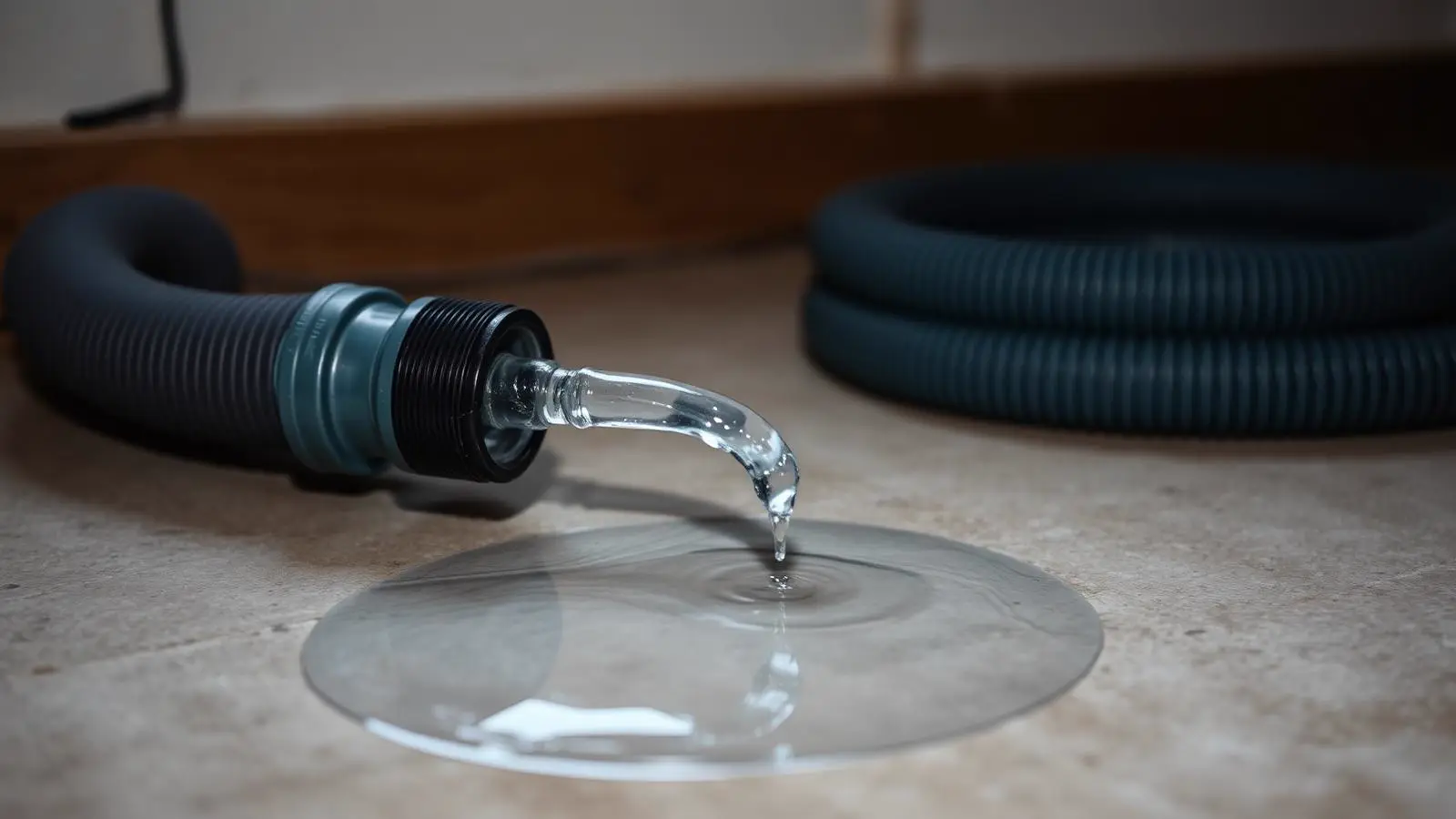
Causes, solutions and when to call a professional
Expert Answer
A slow trickle instead of a strong flow during a flush usually means the drain valve opening is partially clogged with sediment, the garden hose is kinked, or there isn't enough air entering the tank to push water out at full speed. Each takes a few minutes to check.
How Serious Is This?
Usually Manageable
Monitor it and run the safe checks below before spending money.
This is the level for this problem: Usually safe to investigate.
Inspection Recommended
Have a professional look at it soon to prevent damage or failure.
Potentially Serious
Stop using the appliance and get professional help right away.
Safety warning
Let the tank cool before draining to avoid scalding, and keep the discharge hose routed to a floor drain or outside rather than a sink that could back up hot, sediment-laden water.
Most Likely Causes
- 1Kinked, coiled, or undersized garden hose
- 2Partial sediment clog narrowing the valve opening
- 3Insufficient air entering the tank to sustain full flow
- 4Hard-water scale narrowing the valve body and boss opening
Safe Homeowner Checks
Disconnect the hose, open the valve directly into a bucket for 15 seconds, and compare that flow rate to what the hose produced.
Takes: 4 min · Tools: Bucket, Timer or phone stopwatch
Disconnect the hose, open the valve directly into a bucket for 15 seconds, and compare that flow rate to what the hose produced.
Expect: Flow directly from the valve should be noticeably stronger and steadier than through the hose.
What it means: A big improvement without the hose confirms the hose — not the valve or tank — is the bottleneck.
Next step: Straighten the hose run, remove any coils or uphill sections, or swap to a full 3/4-inch diameter hose.
With the valve open and draining, insert a drain-valve poker tool or stiff wire a few inches in and gently work it side to side without forcing it.
Takes: 6 min · Tools: Drain-valve poker tool or stiff wire, Bucket
With the valve open and draining, insert a drain-valve poker tool or stiff wire a few inches in and gently work it side to side without forcing it.
Expect: Flow rate should visibly increase within a minute of working the poker tool.
What it means: An increase confirms sediment was partially blocking the opening; no change suggests the restriction is elsewhere.
Next step: Continue draining until water runs clear, then close the valve and consider a more thorough descale flush.
While draining, open a second hot-water tap fully at a different fixture and watch whether flow at the drain valve immediately picks up.
Takes: 2 min · Tools: None
While draining, open a second hot-water tap fully at a different fixture and watch whether flow at the drain valve immediately picks up.
Expect: Flow at the drain valve increases noticeably within seconds of opening the second tap.
What it means: An immediate increase confirms airflow was the limiting factor, not the valve or sediment.
Next step: Keep at least one tap fully open (not just cracked) for the entire duration of any future flush.
After replacing or fully clearing the drain valve, time how long it takes to fill a 1-gallon container directly from the open valve.
Takes: 3 min · Tools: 1-gallon container, Timer
After replacing or fully clearing the drain valve, time how long it takes to fill a 1-gallon container directly from the open valve.
Expect: A healthy 3/4-inch valve should fill 1 gallon in roughly 10–20 seconds with typical household pressure behind it.
What it means: Filling much slower than that, even with a new valve, points to scale narrowing the tank's boss opening itself, not the valve.
Next step: Consider a water softener to slow future scale buildup; a severely scaled boss opening may require professional descaling or is a sign it's time to plan for replacement.
Need Help With a Water Heater Draining so slow?
A qualified licensed plumber can confirm the cause on site, check the safety controls, and quote the repair before the problem gets more expensive.
Fast Request • Local Matching • No Obligation
A tank that eventually drains, just far slower than the strong stream you'd expect from a 3/4-inch drain valve, points to a partial restriction rather than a complete blockage. Unlike a fully clogged valve, slow flow is often fixable by clearing one specific bottleneck in the path between the tank and the bucket or hose. Work through the flow path in order — hose, valve, air supply, then scale — since any one of them narrows the effective opening enough to slow things dramatically.
Every likely cause, ranked
- #1
Kinked, coiled, or undersized garden hose
Most common causeA garden hose attached to the drain valve for flushing to a floor drain or outside is easy to accidentally kink around a tight bend, or coil in a way that traps an air pocket that slows gravity flow. A narrower 1/2-inch hose also restricts flow compared to the 3/4-inch valve opening it's attached to.
It's the single easiest cause to overlook because attention is on the valve itself, not the 10–15 feet of hose between the valve and the drain point.
Exact symptoms
- Flow noticeably improves when the hose is disconnected and water is drained directly into a bucket at the valve
- Hose has visible kinks, tight coils, or runs uphill at any point along its length
- Hose diameter is smaller than 3/4 inch
Self-test (4 min) — tools: Bucket, Timer or phone stopwatch
Disconnect the hose, open the valve directly into a bucket for 15 seconds, and compare that flow rate to what the hose produced.
Expect: Flow directly from the valve should be noticeably stronger and steadier than through the hose.
What it means: A big improvement without the hose confirms the hose — not the valve or tank — is the bottleneck.
Next step: Straighten the hose run, remove any coils or uphill sections, or swap to a full 3/4-inch diameter hose.
DIY-eligible · DIY $10–$20 for a proper 3/4-inch hose · Pro Not applicable · 10 minutes
- #2
Partial sediment clog narrowing the valve opening
Unlike a full blockage, a partial clog leaves a small gap around a plug of sediment sitting in the valve body, letting water trickle past at a fraction of the valve's rated flow. This is extremely common on tanks flushed only occasionally, where sediment has had time to partially harden.
It's the most likely cause once the hose has been ruled out, especially on hard water or on a tank that hasn't been flushed in more than a year.
Exact symptoms
- Flow is a slow, steady trickle rather than a strong stream, even directly from the valve
- Water runs noticeably cloudy or gritty for the first several minutes
- Flow rate improves gradually over the course of the drain as sediment washes out
Self-test (6 min) — tools: Drain-valve poker tool or stiff wire, Bucket
With the valve open and draining, insert a drain-valve poker tool or stiff wire a few inches in and gently work it side to side without forcing it.
Expect: Flow rate should visibly increase within a minute of working the poker tool.
What it means: An increase confirms sediment was partially blocking the opening; no change suggests the restriction is elsewhere.
Next step: Continue draining until water runs clear, then close the valve and consider a more thorough descale flush.
DIY-eligible · DIY $8–$15 for a poker tool · Pro $150–$300 for a professional descale flush · 20–40 minutes
- #3
Insufficient air entering the tank to sustain full flow
Even with one hot tap cracked open elsewhere in the house, a faucet that's only partly open, or a fixture with a low-flow aerator, may not admit air fast enough to keep pace with the water leaving the tank, causing flow to slow to a trickle partway through rather than stopping completely.
It's an easy detail to get partially right — many people open a tap but not fully, assuming a crack is enough, which works for a slow drip but not for sustaining a strong flush-speed flow.
Exact symptoms
- Flow starts strong, then gradually slows over the first minute or two
- Only one faucet is open, and it's only partially open
- Opening a second tap elsewhere in the house noticeably speeds the drain back up
Self-test (2 min) — tools: None
While draining, open a second hot-water tap fully at a different fixture and watch whether flow at the drain valve immediately picks up.
Expect: Flow at the drain valve increases noticeably within seconds of opening the second tap.
What it means: An immediate increase confirms airflow was the limiting factor, not the valve or sediment.
Next step: Keep at least one tap fully open (not just cracked) for the entire duration of any future flush.
DIY-eligible · DIY $0 · Pro Not applicable · Immediate
- #4
Hard-water scale narrowing the valve body and boss opening
In hard-water areas, calcium and magnesium minerals precipitate out of solution as the tank heats water, and over years this scale coats and narrows the boss opening (where the valve threads into the tank) as well as the inside of the valve itself, permanently reducing the maximum flow rate even after sediment is cleared.
It's the explanation when slow flow persists year after year despite regular flushing and a working, unobstructed valve, particularly in known hard-water regions.
Exact symptoms
- Flow stays slow even immediately after a full valve replacement
- Home is in a documented hard-water area or has visible scale on faucet aerators and showerheads
- Water tests show hardness above roughly 7 grains per gallon (120 mg/L)
Self-test (3 min) — tools: 1-gallon container, Timer
After replacing or fully clearing the drain valve, time how long it takes to fill a 1-gallon container directly from the open valve.
Expect: A healthy 3/4-inch valve should fill 1 gallon in roughly 10–20 seconds with typical household pressure behind it.
What it means: Filling much slower than that, even with a new valve, points to scale narrowing the tank's boss opening itself, not the valve.
Next step: Consider a water softener to slow future scale buildup; a severely scaled boss opening may require professional descaling or is a sign it's time to plan for replacement.
Professional repair · DIY $0 to test · Pro $150–$300 for descaling; $400–$1,000+ for a whole-house softener · 1–2 hours for descaling
Symptom-to-cause table
Match what you can see, hear or smell to the cause it points at, and the safe next step for that reading.
Flow noticeably improves when the hose is disconnected and water is drained directly into a bucket at the valve
Likely cause: Kinked, coiled, or undersized garden hose
Who should handle it: Homeowner, then licensed plumber
Next step: Straighten the hose run, remove any coils or uphill sections, or swap to a full 3/4-inch diameter hose.
Flow is a slow, steady trickle rather than a strong stream, even directly from the valve
Likely cause: Partial sediment clog narrowing the valve opening
Who should handle it: Homeowner, then licensed plumber
Next step: Continue draining until water runs clear, then close the valve and consider a more thorough descale flush.
Flow starts strong, then gradually slows over the first minute or two
Likely cause: Insufficient air entering the tank to sustain full flow
Who should handle it: Homeowner, then licensed plumber
Next step: Keep at least one tap fully open (not just cracked) for the entire duration of any future flush.
Flow stays slow even immediately after a full valve replacement
Likely cause: Hard-water scale narrowing the valve body and boss opening
Who should handle it: licensed plumber
Next step: Consider a water softener to slow future scale buildup; a severely scaled boss opening may require professional descaling or is a sign it's time to plan for replacement.
Ten-minute homeowner checklist
- Disconnect the hose, open the valve directly into a bucket for 15 seconds, and compare that flow rate to what the hose produced. (4 min · Bucket, Timer or phone stopwatch)
- With the valve open and draining, insert a drain-valve poker tool or stiff wire a few inches in and gently work it side to side without forcing it. (6 min · Drain-valve poker tool or stiff wire, Bucket)
- While draining, open a second hot-water tap fully at a different fixture and watch whether flow at the drain valve immediately picks up. (2 min · None)
- After replacing or fully clearing the drain valve, time how long it takes to fill a 1-gallon container directly from the open valve. (3 min · 1-gallon container, Timer)
Never open an electrical panel, relight a burner you can smell gas near, or drain a tank that is scalding hot. Stop and call a licensed plumber instead.
What this costs to fix
| Cause | DIY cost | Professional cost | Typical time | Who should repair |
|---|---|---|---|---|
| Kinked, coiled, or undersized garden hose | $10–$20 | Not applicable | 10 minutes | Homeowner |
| Partial sediment clog in the valve | $8–$15 | $150–$300 | 20–40 minutes | Homeowner or licensed plumber |
| Insufficient air entering the tank | $0 | Not applicable | Immediate | Homeowner |
| Hard-water scale narrowing the valve body | $0 to test | $150–$1,000+ | 1–2 hours | Licensed plumber |
Kinked, coiled, or undersized garden hose
DIY cost: $10–$20
Professional cost: Not applicable
Typical time: 10 minutes
Who should repair: Homeowner
Partial sediment clog in the valve
DIY cost: $8–$15
Professional cost: $150–$300
Typical time: 20–40 minutes
Who should repair: Homeowner or licensed plumber
Insufficient air entering the tank
DIY cost: $0
Professional cost: Not applicable
Typical time: Immediate
Who should repair: Homeowner
Hard-water scale narrowing the valve body
DIY cost: $0 to test
Professional cost: $150–$1,000+
Typical time: 1–2 hours
Who should repair: Licensed plumber
Possible solutions you can do safely
- Test flow directly from the valve into a bucket before blaming the tank — a kinked hose is often the real cause.
- Use a drain-valve poker tool partway through a flush if flow is a slow trickle rather than a full stop.
- Open a hot-water tap fully, not just cracked, to keep enough air moving into the tank.
- Time a 1-gallon fill from the valve after a flush to gauge whether the flow rate is actually improving.
Fixes that usually waste money
- Replacing the drain valve repeatedly without first testing flow directly into a bucket to rule out the hose.
- Installing a whole-house softener purely to fix a slow flush before confirming scale is actually the cause.
- Assuming slow flow means the tank needs replacement when a $10 poker tool clears it in minutes.
When to Call a Professional
- Flow stays slow even after a brand-new valve and a fully open tap.
- You suspect scale has narrowed the tank's boss opening itself, not just the valve.
- Water hardness tests come back high and you're considering a whole-house softener.
- Sediment keeps returning heavily within a few months of each flush, suggesting a deeper issue.
Related Home Problems
These water heater symptoms often show up with the one on this page.
why is my water heater not draining
Points at the same part of the system — both problems involve the sediment.
Efficiency, Costs & Maintenance Usually safe to investigate
why is my water heater making a popping noise
Points at the same part of the system — both problems involve the sediment.
Noises Repair soon
why is my water heater popping
Points at the same part of the system — both problems involve the sediment.
Noises Repair soon
why is my water heater leaking from the drain valve
Points at the same part of the system — both problems involve the sediment.
Leaks & Water Pressure Usually safe to investigate
why is my water heater not heating
Points at the same part of the system — both problems involve the sediment.
No Hot Water & Temperature Repair soon
Still not sure what you are hearing or seeing? Browse the efficiency, costs & maintenance guides or the full water heater guide index with repair-cost ranges.
Frequently Asked Questions
How long should it take to drain a water heater?
A 40–50 gallon tank with a clear 3/4-inch valve, a straight hose, and a fully open air-admitting tap typically drains in 15–25 minutes. Taking much longer usually means a partial clog, a kinked hose, or insufficient airflow.
Why does my water heater drain fast at first then slow down?
This is a classic sign of insufficient air entering the tank — flow starts strong on the water already under pressure, then throttles down as a vacuum starts to form. Open a second hot tap fully to confirm and fix it.
Does a kinked hose really slow down draining that much?
Yes. A tight kink or a narrow 1/2-inch hose can cut flow to a fraction of what a straight 3/4-inch hose delivers. Testing flow directly from the valve into a bucket, without the hose, quickly confirms whether the hose is the bottleneck.
Will a water softener fix slow draining?
It can prevent future scale buildup that narrows the valve and boss opening, but it won't clear an existing partial clog. Clear the current blockage with a poker tool or valve replacement first, then consider a softener if hardness is confirmed high.
Sources
- U.S. Department of Energy — Water Heater Maintenance — Draining and Flushing
- U.S. Environmental Protection Agency — Water Hardness and Home Plumbing
Ready to get this fixed?
Tell us your ZIP code and what the heater is doing. We match your request to a local licensed plumber.
Fast Request • Local Matching • No Obligation
Published 2026-08-10 · Last reviewed 2026-08-10 · Reviewed by Why Is My Water Heater? editorial team · How we research