
why is my water heater knocking
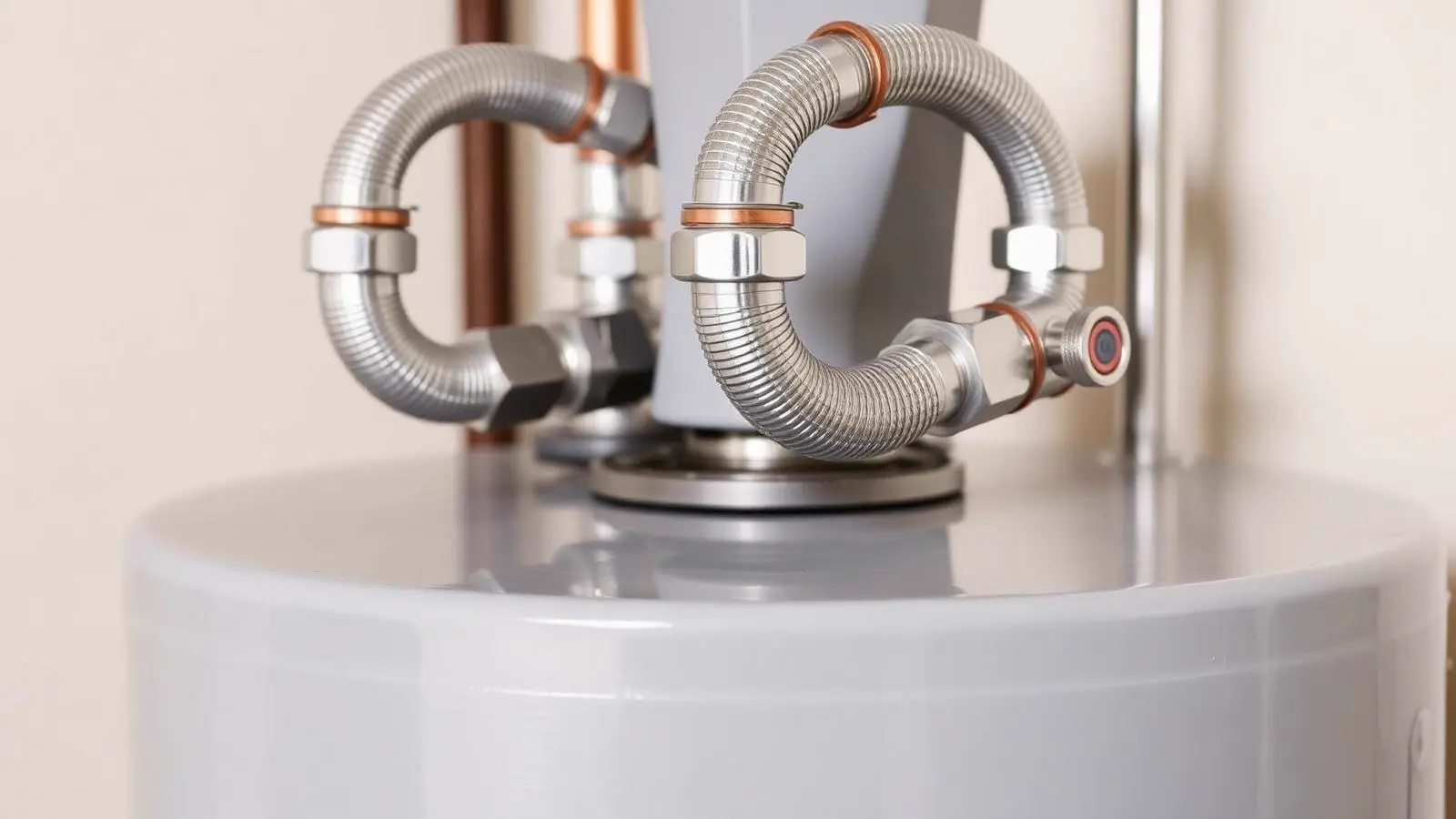
Causes, solutions and when to call a professional
Expert Answer
If knocking happens only when a fixture or appliance valve shuts off, it's water hammer in the pipes. If it happens only during the heater's own heating cycle with no fixtures running, it's sediment or expanding pipe near the tank.
How Serious Is This?
Usually Manageable
Monitor it and run the safe checks below before spending money.
This is the level for this problem: Usually safe to investigate.
Inspection Recommended
Have a professional look at it soon to prevent damage or failure.
Potentially Serious
Stop using the appliance and get professional help right away.
Most Likely Causes
- 1Knocking that happens only when using a fixture (water hammer)
- 2Knocking that happens during the tank's own heating cycle (sediment)
- 3Knocking that follows the pipe path away from the tank (expansion against framing)
- 4Loose heating element or internal baffle (tank interior)
Safe Homeowner Checks
Shut off every fixture and appliance in the house, then wait 10 minutes in silence near the water heater listening for any knock with zero water flow.
Takes: 10 min · Tools: None
Shut off every fixture and appliance in the house, then wait 10 minutes in silence near the water heater listening for any knock with zero water flow.
Expect: No knocking occurs with all fixtures off.
What it means: Silence with no water use confirms the knock is triggered by fixture shutoff, not the tank.
Next step: Install water hammer arrestors at the fixtures identified as triggers.
With all fixtures off, wait for a heating cycle to start (or run a large hot draw to trigger one), then listen directly at the tank jacket for a dull knock timed with the burner or element run.
Takes: 10 min · Tools: None
With all fixtures off, wait for a heating cycle to start (or run a large hot draw to trigger one), then listen directly at the tank jacket for a dull knock timed with the burner or element run.
Expect: Knock is heard specifically while the burner or element is active.
What it means: Confirms sediment as the likely source rather than external plumbing.
Next step: Drain and flush the tank through the drain valve.
During an active heating cycle, place a hand flat on the supply pipe every foot or two moving away from the tank to find where vibration is strongest.
Takes: 6 min · Tools: Flashlight
During an active heating cycle, place a hand flat on the supply pipe every foot or two moving away from the tank to find where vibration is strongest.
Expect: Vibration or knock is strongest at one specific contact point on the pipe.
What it means: Confirms pipe expansion against a framing member at that location.
Next step: Add a foam sleeve or rubber-cushioned clamp at that contact point.
After confirming a flush hasn't changed the sound, run a heating cycle and listen with a mechanic's stethoscope or a screwdriver held to your ear against the tank shell to localize the rattle.
Takes: 8 min · Tools: Mechanic's stethoscope or long screwdriver
After confirming a flush hasn't changed the sound, run a heating cycle and listen with a mechanic's stethoscope or a screwdriver held to your ear against the tank shell to localize the rattle.
Expect: A distinct rattle or knock localizes to one area of the tank shell.
What it means: Suggests a loose internal component rather than sediment or external piping.
Next step: Have a technician inspect and tighten or replace the element and its bracket.
Need Help With a Water Heater Knocking?
A qualified licensed plumber or water-heater technician can confirm the cause on site, check the safety controls, and quote the repair before the problem gets more expensive.
Fast Request • Local Matching • No Obligation
The single most useful diagnostic question for a knocking water heater is: does it happen when I use water, or does it happen when I'm not using any water at all? That timing split separates a plumbing-system issue from a tank issue and points you to a different fix.
Every likely cause, ranked
- #1
Knocking that happens only when using a fixture (water hammer)
Most common causeModern quick-closing valves — washing machine solenoids, some dishwashers, single-lever faucets — stop a fast-moving column of water almost instantly. The sudden stop sends a pressure spike back through rigid pipe, which slaps against its supports.
This pattern accounts for most knocking complaints and has nothing to do with the water heater's condition, even though the sound often seems to come from that direction.
Exact symptoms
- Knock occurs within a second of a faucet, valve, or appliance shutting off
- No knocking overnight or when no fixtures are in use
- Sound is sharp and singular, not repeating rhythmically
Self-test (10 min) — tools: None
Shut off every fixture and appliance in the house, then wait 10 minutes in silence near the water heater listening for any knock with zero water flow.
Expect: No knocking occurs with all fixtures off.
What it means: Silence with no water use confirms the knock is triggered by fixture shutoff, not the tank.
Next step: Install water hammer arrestors at the fixtures identified as triggers.
DIY-eligible · DIY $10–$30 per arrestor · Pro $120–$250 · 30–60 minutes
- #2
Knocking that happens during the tank's own heating cycle (sediment)
Sediment coating the bottom of the tank insulates that layer from the burner or lower element. Water and steam pockets trapped under and within the crust expand and collapse as the layer heats unevenly, producing a knock or dull thud from inside the tank.
If the knock happens with every fixture in the house closed and repeats several times over a heating cycle, sediment inside the tank is the leading explanation, especially on hard water.
Exact symptoms
- Knocking repeats several times over a few minutes, only during active heating
- No fixtures in use anywhere in the house when it happens
- Tank has not been flushed in over a year
Self-test (10 min) — tools: None
With all fixtures off, wait for a heating cycle to start (or run a large hot draw to trigger one), then listen directly at the tank jacket for a dull knock timed with the burner or element run.
Expect: Knock is heard specifically while the burner or element is active.
What it means: Confirms sediment as the likely source rather than external plumbing.
Next step: Drain and flush the tank through the drain valve.
DIY-eligible · DIY $0 · Pro $100–$200 · 45–60 minutes
- #3
Knocking that follows the pipe path away from the tank (expansion against framing)
As pipe near the tank heats and cools with each cycle, it lengthens and shortens slightly. Where it is pinned tight against a joist, stud, or strap, that movement produces a knock that a listener can trace a few feet along the pipe run.
Distinguished from sediment because the sound source moves when you follow the pipe, and from water hammer because it happens on a heating cycle, not a fixture shutoff.
Exact symptoms
- Sound source shifts location when traced along the pipe a few feet from the tank
- Timed with the heating cycle, not fixture use
- Pipe visibly contacts a joist or framing member
Self-test (6 min) — tools: Flashlight
During an active heating cycle, place a hand flat on the supply pipe every foot or two moving away from the tank to find where vibration is strongest.
Expect: Vibration or knock is strongest at one specific contact point on the pipe.
What it means: Confirms pipe expansion against a framing member at that location.
Next step: Add a foam sleeve or rubber-cushioned clamp at that contact point.
DIY-eligible · DIY $5–$20 · Pro $100–$200 · 30–45 minutes
- #4
Loose heating element or internal baffle (tank interior)
On some models, a loose immersion element, dip tube support, or internal baffle can rattle or knock lightly against the tank wall as water currents move during heating, independent of sediment.
Less common than sediment or pipe expansion, but worth ruling out if a flush and pipe inspection don't resolve a persistent internal knock.
Exact symptoms
- Light, rattly knock persists even after a thorough flush
- Sound is centered at the tank body, not traceable along any pipe
- Occurs on electric models more often than gas
Self-test (8 min) — tools: Mechanic's stethoscope or long screwdriver
After confirming a flush hasn't changed the sound, run a heating cycle and listen with a mechanic's stethoscope or a screwdriver held to your ear against the tank shell to localize the rattle.
Expect: A distinct rattle or knock localizes to one area of the tank shell.
What it means: Suggests a loose internal component rather than sediment or external piping.
Next step: Have a technician inspect and tighten or replace the element and its bracket.
Professional repair · DIY Diagnosis only · Pro $150–$300 · 1–2 hours
Symptom-to-cause table
Match what you can see, hear or smell to the cause it points at, and the safe next step for that reading.
Knock occurs within a second of a faucet, valve, or appliance shutting off
Likely cause: Knocking that happens only when using a fixture (water hammer)
Who should handle it: Homeowner, then licensed plumber or water-heater technician
Next step: Install water hammer arrestors at the fixtures identified as triggers.
Knocking repeats several times over a few minutes, only during active heating
Likely cause: Knocking that happens during the tank's own heating cycle (sediment)
Who should handle it: Homeowner, then licensed plumber or water-heater technician
Next step: Drain and flush the tank through the drain valve.
Sound source shifts location when traced along the pipe a few feet from the tank
Likely cause: Knocking that follows the pipe path away from the tank (expansion against framing)
Who should handle it: Homeowner, then licensed plumber or water-heater technician
Next step: Add a foam sleeve or rubber-cushioned clamp at that contact point.
Light, rattly knock persists even after a thorough flush
Likely cause: Loose heating element or internal baffle (tank interior)
Who should handle it: licensed plumber or water-heater technician
Next step: Have a technician inspect and tighten or replace the element and its bracket.
Ten-minute homeowner checklist
- Shut off every fixture and appliance in the house, then wait 10 minutes in silence near the water heater listening for any knock with zero water flow. (10 min · None)
- With all fixtures off, wait for a heating cycle to start (or run a large hot draw to trigger one), then listen directly at the tank jacket for a dull knock timed with the burner or element run. (10 min · None)
- During an active heating cycle, place a hand flat on the supply pipe every foot or two moving away from the tank to find where vibration is strongest. (6 min · Flashlight)
- After confirming a flush hasn't changed the sound, run a heating cycle and listen with a mechanic's stethoscope or a screwdriver held to your ear against the tank shell to localize the rattle. (8 min · Mechanic's stethoscope or long screwdriver)
Never open an electrical panel, relight a burner you can smell gas near, or drain a tank that is scalding hot. Stop and call a licensed plumber or water-heater technician instead.
What this costs to fix
| Cause | DIY cost | Professional cost | Typical time | Who should repair |
|---|---|---|---|---|
| Water hammer at a fixture | $10–$30 | $120–$250 | 30–60 minutes | Homeowner or licensed plumber |
| Sediment during heating cycle | $0 | $100–$200 | 45–60 minutes | Homeowner or water-heater technician |
| Pipe expansion against framing | $5–$20 | $100–$200 | 30–45 minutes | Homeowner or licensed plumber |
| Loose internal element or baffle | Not DIY | $150–$300 | 1–2 hours | Water-heater technician |
Water hammer at a fixture
DIY cost: $10–$30
Professional cost: $120–$250
Typical time: 30–60 minutes
Who should repair: Homeowner or licensed plumber
Sediment during heating cycle
DIY cost: $0
Professional cost: $100–$200
Typical time: 45–60 minutes
Who should repair: Homeowner or water-heater technician
Pipe expansion against framing
DIY cost: $5–$20
Professional cost: $100–$200
Typical time: 30–45 minutes
Who should repair: Homeowner or licensed plumber
Loose internal element or baffle
DIY cost: Not DIY
Professional cost: $150–$300
Typical time: 1–2 hours
Who should repair: Water-heater technician
Possible solutions you can do safely
- Time the knock against fixture use and the heating cycle before doing anything else.
- Install a water hammer arrestor if the knock ties to a fixture shutoff.
- Flush the tank if the knock ties to the heating cycle with no fixtures running.
- Cushion any pipe touching framing with foam insulation or a rubber-lined clamp.
Fixes that usually waste money
- Calling for a full tank replacement before timing the knock — most knocking is a cheap fixture or pipe fix.
- Installing multiple arrestors throughout the house without first identifying which fixture triggers the noise.
- Chemical tank treatments marketed to 'dissolve' sediment; they don't remove settled scale.
When to Call a Professional
- The knock persists after both a flush and a check of nearby fixtures and pipes.
- You suspect a loose internal element and the tank is still under warranty.
- Knocking is joined by leaking, rust-tinted water, or a hissing sound.
- The tank is over ten years old and the noise is getting louder over weeks.
Related Home Problems
These water heater symptoms often show up with the one on this page.
why is my water heater making a knocking noise
Points at the same part of the system — both problems involve the hammer.
Noises Usually safe to investigate
why is my water heater making loud noises
Points at the same part of the system — both problems involve the sediment.
Noises Repair soon
why is my water heater popping
Points at the same part of the system — both problems involve the sediment.
Noises Repair soon
why is my water heater gurgling
Points at the same part of the system — both problems involve the sediment.
Noises Usually safe to investigate
why is my water heater vibrating
Points at the same part of the system — both problems involve the against.
Noises Usually safe to investigate
Still not sure what you are hearing or seeing? Browse the noises guides or the full water heater guide index with repair-cost ranges.
Frequently Asked Questions
How do I tell water hammer apart from sediment knocking?
Water hammer happens within a second of a fixture or appliance valve closing and is silent when nothing is running. Sediment knocking happens with every fixture off, only while the burner or element is actively heating, and repeats several times per cycle.
Does knocking mean my water heater is about to fail?
No. Knocking on its own, especially traceable to a fixture or sediment, is a maintenance issue, not a sign of imminent failure. It becomes a bigger concern only alongside leaking, rust in the water, or a bulging tank.
Will a plumber need to cut into walls to fix knocking pipes?
Usually not. Most water hammer is solved by installing an arrestor at an accessible fixture supply line or washing machine box. Cutting into finished walls is only needed if the noisy pipe section is fully enclosed and inaccessible any other way.
How often should I flush the tank to prevent knocking?
Once a year for most households, twice a year on hard, untreated water. Regular flushing keeps sediment from building into the thick, insulating layer that causes both knocking and reduced heating efficiency.
Sources
- International Code Council — International Plumbing Code, Section 604.9 — Water Hammer
- U.S. Department of Energy — Water Heater Maintenance
Ready to get this fixed?
Tell us your ZIP code and what the heater is doing. We match your request to a local licensed plumber or water-heater technician.
Fast Request • Local Matching • No Obligation
Published 2026-08-10 · Last reviewed 2026-08-10 · Reviewed by Why Is My Water Heater? editorial team · How we research