
why is my water heater leaking from the overflow pipe
Causes, solutions and when to call a professional
Expert Answer
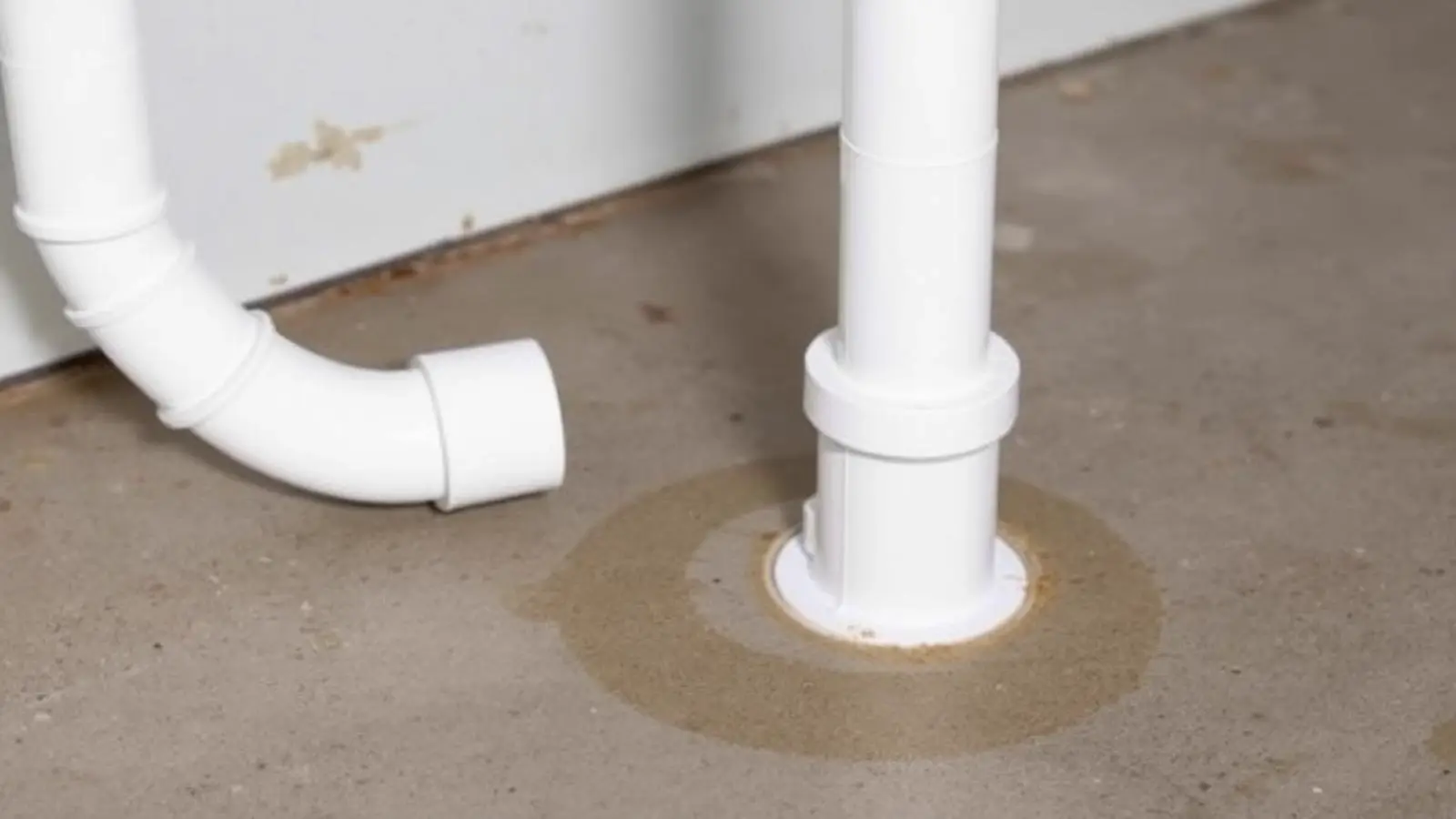
What people call the 'overflow pipe' is the discharge line for the temperature and pressure relief valve. It carries water only when that valve opens — from excess pressure (thermal expansion, high static pressure) or excess temperature. The pipe itself is rarely the problem.
How Serious Is This?
Usually Manageable
Monitor it and run the safe checks below before spending money.
Inspection Recommended
Have a professional look at it soon to prevent damage or failure.
This is the level for this problem: Repair soon.
Potentially Serious
Stop using the appliance and get professional help right away.
Safety warning
This pipe must remain completely open at all times. Never cap it, reduce its diameter, add a valve to it, or route it uphill. Doing so removes the tank's only pressure-release path and creates a rupture risk.
Most Likely Causes
- 1Relief valve opening from thermal expansion
- 2House static pressure exceeding 80 psi
- 3Overheated water tripping the valve's thermal element
- 4The pipe was improperly modified or damaged
Safe Homeowner Checks
Check static pressure with a hose-bib gauge, then check again right after a heating cycle.
Takes: 8 min · Tools: Water-pressure gauge
Check static pressure with a hose-bib gauge, then check again right after a heating cycle.
Expect: Rise under 10 psi after heating.
What it means: A larger jump confirms thermal expansion is pushing the valve open.
Next step: Install a thermal expansion tank on the cold-water supply line.
Screw a gauge onto an outside spigot with no water running and read static pressure.
Takes: 3 min · Tools: Water-pressure gauge
Screw a gauge onto an outside spigot with no water running and read static pressure.
Expect: 40–80 psi.
What it means: Above 80 psi confirms house pressure, not just heating, is forcing the valve open.
Next step: Install or replace a pressure-reducing valve at the main.
Carefully check hot-tap water temperature with a kitchen thermometer.
Takes: 3 min · Tools: Kitchen thermometer
Carefully check hot-tap water temperature with a kitchen thermometer.
Expect: 120 °F.
What it means: Readings above 140 °F alongside pipe discharge indicate a thermostat or element failure, an urgent issue.
Next step: Shut off power or gas to the unit and call a technician the same day.
Water above 140 °F can cause third-degree burns in seconds — limit testing time.
Visually trace the entire pipe from the valve to its termination point, checking for upward slopes, reducers, or caps.
Takes: 5 min · Tools: Flashlight
Visually trace the entire pipe from the valve to its termination point, checking for upward slopes, reducers, or caps.
Expect: A continuous, full-diameter, downward-sloping pipe ending 6 inches or less above the floor or a drain.
What it means: Any upward run, reducer or cap is a code violation and can cause pooling, drips at joints, or a stuck-shut path during an actual discharge.
Next step: Have the pipe corrected to run continuously downhill in full diameter to an approved termination point.
Homeowners often call this the 'overflow pipe,' but it has no connection to a float or overflow system — it's the required discharge line for the temperature and pressure (T&P) relief valve, running from the valve down to within 6 inches of the floor. Water only appears at its outlet when the valve upstream has opened, so the real diagnosis is always at the valve and the pressure/temperature feeding it, not the pipe itself.
Every likely cause, ranked
- #1
Relief valve opening from thermal expansion
Most common causeIn a closed plumbing system (with a check valve or pressure-reducing valve at the meter), water expands as it heats and has nowhere to go but out through the relief valve and down this pipe.
The most frequent reason water appears at the bottom of this pipe, especially in homes with municipal water and a backflow preventer or PRV.
Exact symptoms
- Drips appear only at the very end of the pipe, near the floor
- Timing lines up with the end of a heating cycle
- Pressure gauge shows a jump of 15+ psi after heating
Self-test (8 min) — tools: Water-pressure gauge
Check static pressure with a hose-bib gauge, then check again right after a heating cycle.
Expect: Rise under 10 psi after heating.
What it means: A larger jump confirms thermal expansion is pushing the valve open.
Next step: Install a thermal expansion tank on the cold-water supply line.
Professional repair · DIY $15 gauge · Pro $150–$350 · 1 hour
- #2
House static pressure exceeding 80 psi
Municipal supply pressure can run high, especially overnight, pushing past the point where the relief valve is forced to open to protect the tank at its 150 psi limit.
Common in homes without a pressure-reducing valve, or where an existing PRV has failed open.
Exact symptoms
- Drips or a steady trickle at the pipe outlet unrelated to heating cycles
- Water hammer or banging pipes elsewhere in the house
- Fixtures throughout the house feel unusually forceful
Self-test (3 min) — tools: Water-pressure gauge
Screw a gauge onto an outside spigot with no water running and read static pressure.
Expect: 40–80 psi.
What it means: Above 80 psi confirms house pressure, not just heating, is forcing the valve open.
Next step: Install or replace a pressure-reducing valve at the main.
Professional repair · DIY $15 gauge · Pro $250–$450 · 1–2 hours
- #3
Overheated water tripping the valve's thermal element
A stuck thermostat or failing heating element can push tank temperature past 180–210 °F, at which point the valve opens on temperature alone, independent of pressure.
Less frequent but more serious — it points to a control failure rather than a plumbing configuration issue.
Exact symptoms
- Hot tap water feels scalding rather than just hot
- Discharge is forceful, not a slow drip
- Rumbling or popping from the tank as trapped water superheats around sediment
Self-test (3 min) — tools: Kitchen thermometer
Carefully check hot-tap water temperature with a kitchen thermometer.
Expect: 120 °F.
What it means: Readings above 140 °F alongside pipe discharge indicate a thermostat or element failure, an urgent issue.
Next step: Shut off power or gas to the unit and call a technician the same day.
Water above 140 °F can cause third-degree burns in seconds — limit testing time.
Professional repair · DIY Not DIY · Pro $150–$400 · 1–2 hours
- #4
The pipe was improperly modified or damaged
Someone shortened, reduced, angled upward, or partially blocked the discharge pipe during a remodel, which can cause water to pool and drip from a joint rather than the intended open end.
Uncommon, but worth checking on homes with recent renovation work near the water heater.
Exact symptoms
- Drips at a joint partway down the pipe rather than at the open end
- Pipe runs uphill at any point or has a visible kink
- Pipe diameter looks reduced from the valve's original outlet size
Self-test (5 min) — tools: Flashlight
Visually trace the entire pipe from the valve to its termination point, checking for upward slopes, reducers, or caps.
Expect: A continuous, full-diameter, downward-sloping pipe ending 6 inches or less above the floor or a drain.
What it means: Any upward run, reducer or cap is a code violation and can cause pooling, drips at joints, or a stuck-shut path during an actual discharge.
Next step: Have the pipe corrected to run continuously downhill in full diameter to an approved termination point.
Professional repair · DIY Not recommended DIY · Pro $150–$300 · 1 hour
Symptom-to-cause table
Match what you can see, hear or smell to the cause it points at, and the safe next step for that reading.
Drips appear only at the very end of the pipe, near the floor
Likely cause: Relief valve opening from thermal expansion
Who should handle it: licensed plumber
Next step: Install a thermal expansion tank on the cold-water supply line.
Drips or a steady trickle at the pipe outlet unrelated to heating cycles
Likely cause: House static pressure exceeding 80 psi
Who should handle it: licensed plumber
Next step: Install or replace a pressure-reducing valve at the main.
Hot tap water feels scalding rather than just hot
Likely cause: Overheated water tripping the valve's thermal element
Who should handle it: licensed plumber
Next step: Shut off power or gas to the unit and call a technician the same day.
Drips at a joint partway down the pipe rather than at the open end
Likely cause: The pipe was improperly modified or damaged
Who should handle it: licensed plumber
Next step: Have the pipe corrected to run continuously downhill in full diameter to an approved termination point.
Ten-minute homeowner checklist
- Check static pressure with a hose-bib gauge, then check again right after a heating cycle. (8 min · Water-pressure gauge)
- Screw a gauge onto an outside spigot with no water running and read static pressure. (3 min · Water-pressure gauge)
- Carefully check hot-tap water temperature with a kitchen thermometer. (3 min · Kitchen thermometer)Water above 140 °F can cause third-degree burns in seconds — limit testing time.
- Visually trace the entire pipe from the valve to its termination point, checking for upward slopes, reducers, or caps. (5 min · Flashlight)
Never open an electrical panel, relight a burner you can smell gas near, or drain a tank that is scalding hot. Stop and call a licensed plumber instead.
What this costs to fix
| Cause | DIY cost | Professional cost | Typical time | Who should repair |
|---|---|---|---|---|
| Thermal expansion | $15 gauge | $150–$350 | 1 hour | Licensed plumber |
| High static pressure | $15 gauge | $250–$450 | 1–2 hours | Licensed plumber |
| Overheated water (thermostat/element) | Not DIY | $150–$400 | 1–2 hours | Water-heater technician |
| Improperly modified pipe | Not recommended DIY | $150–$300 | 1 hour | Licensed plumber |
Thermal expansion
DIY cost: $15 gauge
Professional cost: $150–$350
Typical time: 1 hour
Who should repair: Licensed plumber
High static pressure
DIY cost: $15 gauge
Professional cost: $250–$450
Typical time: 1–2 hours
Who should repair: Licensed plumber
Overheated water (thermostat/element)
DIY cost: Not DIY
Professional cost: $150–$400
Typical time: 1–2 hours
Who should repair: Water-heater technician
Improperly modified pipe
DIY cost: Not recommended DIY
Professional cost: $150–$300
Typical time: 1 hour
Who should repair: Licensed plumber
Possible solutions you can do safely
- Check pressure with a $15 gauge before assuming the valve or pipe is defective.
- Visually trace the pipe for kinks, reducers or upward runs.
- Lower the thermostat to 120 °F if hot water tests high.
Fixes that usually waste money
- Capping, reducing or valving the pipe to stop drips — this is a serious code and safety violation.
- Replacing the relief valve before checking pressure, since a high-pressure system will just open the new one too.
- Rerouting the pipe cosmetically without fixing the slope or diameter issue causing the drip.
When to Call a Professional
- Static pressure tests above 80 psi.
- Hot water at the tap exceeds 130–140 °F.
- The pipe has a visible kink, reducer, or upward section.
- Discharge is a forceful stream rather than intermittent drips.
Related Home Problems
These water heater symptoms often show up with the one on this page.
why is my water heater overflow pipe dripping
Points at the same part of the system — both problems involve the expansion.
Leaks & Water Pressure Repair soon
why is my water heater overflowing
Points at the same part of the system — both problems involve the heating.
Leaks & Water Pressure Dangerous — act now
why is my water heater pressure relief valve leaking
Points at the same part of the system — both problems involve the thermal.
Leaks & Water Pressure Repair soon
why is my water heater relief valve leaking
Points at the same part of the system — both problems involve the discharge.
Leaks & Water Pressure Repair soon
why is my water heater leaking from the pressure valve
Points at the same part of the system — both problems involve the discharge.
Leaks & Water Pressure Repair soon
Still not sure what you are hearing or seeing? Browse the leaks & water pressure guides or the full water heater guide index with repair-cost ranges.
Frequently Asked Questions
Is the overflow pipe supposed to have water in it?
No — under normal conditions it should be completely dry. It only carries water momentarily when the T&P relief valve opens in response to excess pressure or temperature.
Can I shorten or redirect the overflow pipe myself?
It must terminate within 6 inches of the floor or to an approved drain, run continuously downhill, and stay at full diameter with no valve or cap. Any change should be done by a licensed plumber to keep it code-compliant.
Why does water only come out sometimes?
Because it's tied to the relief valve, which only opens when pressure or temperature exceeds its threshold — often right after a heating cycle when thermal expansion peaks.
Is a wet floor under the pipe an emergency?
Intermittent drips can wait for a scheduled pressure diagnosis. A continuous stream, especially with scalding-hot water at the tap, should be treated as urgent — shut the unit off and call a technician.
Sources
- International Code Council — International Plumbing Code, Section 504 — Relief Valves and Discharge Piping
- American Society of Mechanical Engineers (ASME) — Temperature and Pressure Relief Valve Requirements
Published 2026-08-10 · Last reviewed 2026-08-10 · Reviewed by Why Is My Water Heater? editorial team · How we research