
why is my water heater overflow pipe dripping
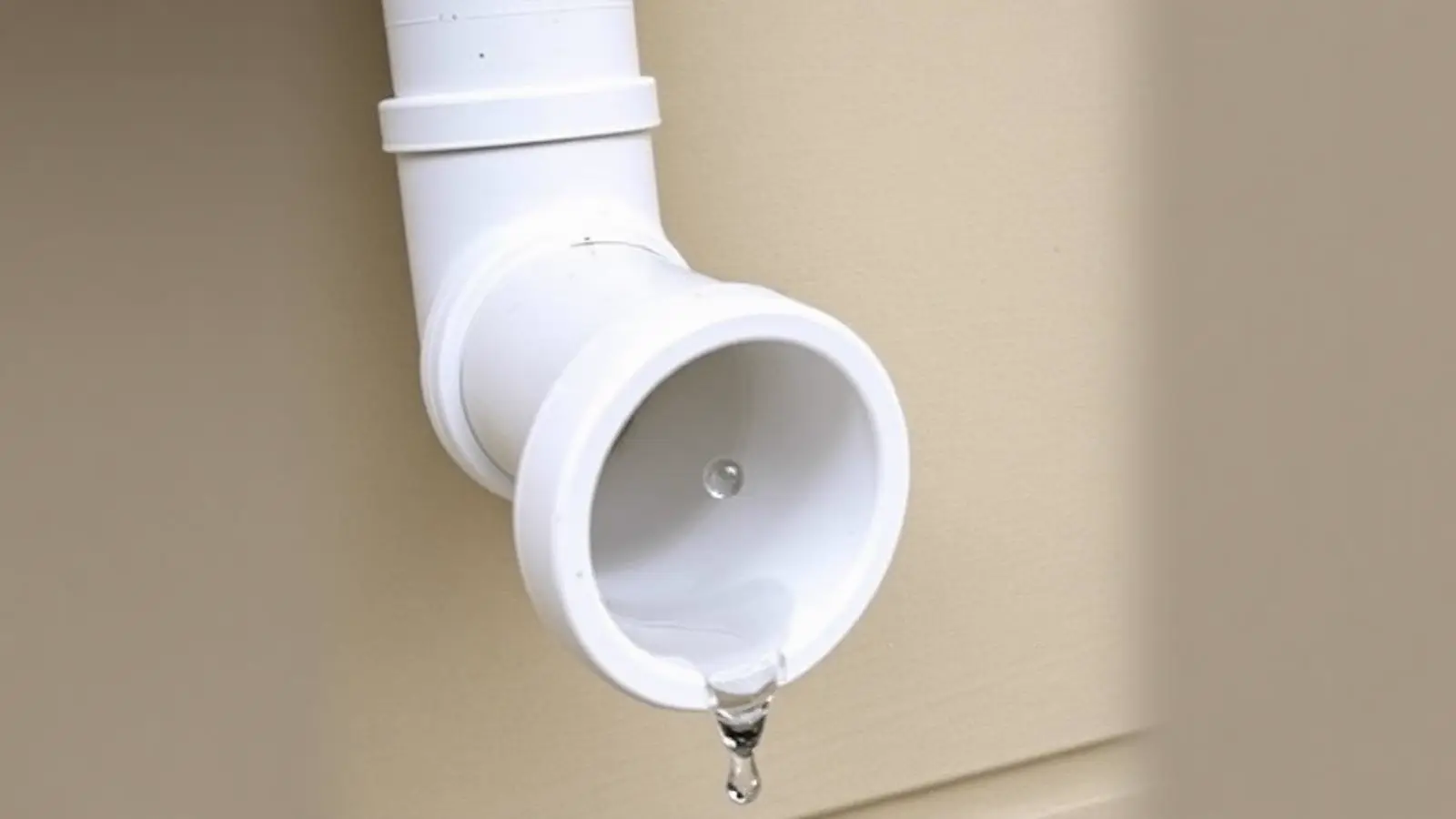
Causes, solutions and when to call a professional
Expert Answer
An intermittent drip from the discharge pipe, especially after heavy hot-water use, points to a missing or waterlogged thermal expansion tank. Test the expansion tank's air charge and system pressure before assuming the relief valve has failed.
How Serious Is This?
Usually Manageable
Monitor it and run the safe checks below before spending money.
Inspection Recommended
Have a professional look at it soon to prevent damage or failure.
This is the level for this problem: Repair soon.
Potentially Serious
Stop using the appliance and get professional help right away.
Safety warning
Never cap or plug the discharge pipe to stop an intermittent drip. Even occasional discharge means the safety valve is actively relieving pressure that needs a permanent, non-blocking fix.
Most Likely Causes
- 1Waterlogged or failed expansion tank
- 2No expansion tank installed on a closed system
- 3Expansion tank undersized for the water heater
Safe Homeowner Checks
Tap the expansion tank with a knuckle from top to bottom.
Takes: 8 min · Tools: Tire pressure gauge, Screwdriver (to briefly release system pressure)
Tap the expansion tank with a knuckle from top to bottom. A good tank sounds hollow (air) on top and solid (water) on the bottom, roughly at the midpoint. Then check its air-charge valve with a tire gauge with the system depressurized.
Expect: A clear hollow-to-solid transition partway up the tank, and air pressure matching house static pressure (typically 50–60 psi).
What it means: A tank that sounds solid all the way to the top, or reads 0 psi at the valve, has failed and is no longer absorbing expansion.
Next step: Replace the expansion tank, sized to your water heater's tank capacity, and pre-charge it to match static house pressure before connecting.
Visually inspect the cold-water line within a few feet of the heater for a small (2–5 gallon) tank, and check the water meter or main for a PRV or check valve.
Takes: 5 min · Tools: Flashlight
Visually inspect the cold-water line within a few feet of the heater for a small (2–5 gallon) tank, and check the water meter or main for a PRV or check valve.
Expect: An expansion tank present anywhere a PRV or check valve exists on the supply.
What it means: A PRV/check valve with no expansion tank confirms the system has no expansion buffer at all.
Next step: Have an appropriately sized expansion tank installed on the cold-water line.
Check the expansion tank's rated volume against manufacturer sizing charts for your water heater's tank capacity.
Takes: 5 min · Tools: Tape measure or model number lookup
Check the expansion tank's rated volume against manufacturer sizing charts for your water heater's tank capacity.
Expect: Expansion tank sized per manufacturer chart for your water heater's gallon capacity.
What it means: An undersized tank explains occasional drips even with a correctly charged bladder.
Next step: Upgrade to a correctly sized expansion tank.
An occasional drip that comes and goes is a different diagnostic path than a constant one — it almost always tracks back to how well the system is absorbing thermal expansion. This page focuses on isolating whether the expansion tank is doing its job, since a waterlogged or missing one is the leading cause of an intermittent (rather than constant) drip.
Every likely cause, ranked
- #1
Waterlogged or failed expansion tank
Most common causeA thermal expansion tank has an internal bladder separating a pre-charged air cushion from the water side. Once that bladder ruptures or the air charge bleeds out, the tank fills entirely with water and can no longer absorb any expansion, so every heating cycle pushes the extra volume straight to the relief valve.
This is the most common reason a previously dry discharge pipe starts dripping intermittently — the tank was working, then quietly failed.
Exact symptoms
- Drip appears only after a full heating cycle or heavy hot-water use, then stops
- Tapping the expansion tank shell shows no hollow, air-filled sound near the top
- System previously had no drip at all before this started
Self-test (8 min) — tools: Tire pressure gauge, Screwdriver (to briefly release system pressure)
Tap the expansion tank with a knuckle from top to bottom. A good tank sounds hollow (air) on top and solid (water) on the bottom, roughly at the midpoint. Then check its air-charge valve with a tire gauge with the system depressurized.
Expect: A clear hollow-to-solid transition partway up the tank, and air pressure matching house static pressure (typically 50–60 psi).
What it means: A tank that sounds solid all the way to the top, or reads 0 psi at the valve, has failed and is no longer absorbing expansion.
Next step: Replace the expansion tank, sized to your water heater's tank capacity, and pre-charge it to match static house pressure before connecting.
Professional repair · DIY $15 gauge to test · Pro $150–$350 installed · 1 hour
- #2
No expansion tank installed on a closed system
Some homes had an expansion tank added only when code required it — often when a PRV or check valve was installed at the meter. If that requirement was missed, the system has no buffer for expansion at all.
Common in homes where a PRV was retrofitted at the meter without also adding the expansion tank that code pairs with it.
Exact symptoms
- No expansion tank visible on the cold-water line near the heater
- A PRV or backflow preventer is present at the main
- Drip is consistent and predictable after every long heating cycle
Self-test (5 min) — tools: Flashlight
Visually inspect the cold-water line within a few feet of the heater for a small (2–5 gallon) tank, and check the water meter or main for a PRV or check valve.
Expect: An expansion tank present anywhere a PRV or check valve exists on the supply.
What it means: A PRV/check valve with no expansion tank confirms the system has no expansion buffer at all.
Next step: Have an appropriately sized expansion tank installed on the cold-water line.
Professional repair · DIY $0 to inspect · Pro $150–$350 · 1 hour
- #3
Expansion tank undersized for the water heater
Expansion tanks are sized to the water heater's tank volume (a 2-gallon expansion tank suits a 40–50 gallon water heater, larger tanks need more). An undersized tank fills its air-cushion capacity quickly and stops buffering expansion partway through a heating cycle.
Occurs after a water heater upgrade (e.g., 40-gallon to 75-gallon) where the original small expansion tank was kept in place.
Exact symptoms
- Drip only on the longest heating cycles or after back-to-back showers
- Expansion tank is noticeably smaller than typical for the water heater's size
- Tank tests fine (correct air charge) but drip still occurs occasionally
Self-test (5 min) — tools: Tape measure or model number lookup
Check the expansion tank's rated volume against manufacturer sizing charts for your water heater's tank capacity.
Expect: Expansion tank sized per manufacturer chart for your water heater's gallon capacity.
What it means: An undersized tank explains occasional drips even with a correctly charged bladder.
Next step: Upgrade to a correctly sized expansion tank.
Professional repair · DIY $0 to check sizing · Pro $150–$350 · 1 hour
Symptom-to-cause table
Match what you can see, hear or smell to the cause it points at, and the safe next step for that reading.
Drip appears only after a full heating cycle or heavy hot-water use, then stops
Likely cause: Waterlogged or failed expansion tank
Who should handle it: licensed plumber
Next step: Replace the expansion tank, sized to your water heater's tank capacity, and pre-charge it to match static house pressure before connecting.
No expansion tank visible on the cold-water line near the heater
Likely cause: No expansion tank installed on a closed system
Who should handle it: licensed plumber
Next step: Have an appropriately sized expansion tank installed on the cold-water line.
Drip only on the longest heating cycles or after back-to-back showers
Likely cause: Expansion tank undersized for the water heater
Who should handle it: licensed plumber
Next step: Upgrade to a correctly sized expansion tank.
Ten-minute homeowner checklist
- Tap the expansion tank with a knuckle from top to bottom. (8 min · Tire pressure gauge, Screwdriver (to briefly release system pressure))
- Visually inspect the cold-water line within a few feet of the heater for a small (2–5 gallon) tank, and check the water meter or main for a PRV or check valve. (5 min · Flashlight)
- Check the expansion tank's rated volume against manufacturer sizing charts for your water heater's tank capacity. (5 min · Tape measure or model number lookup)
Never open an electrical panel, relight a burner you can smell gas near, or drain a tank that is scalding hot. Stop and call a licensed plumber instead.
What this costs to fix
| Cause | DIY cost | Professional cost | Typical time | Who should repair |
|---|---|---|---|---|
| Waterlogged/failed expansion tank | $15 gauge | $150–$350 | 1 hour | Licensed plumber |
| No expansion tank installed | $0 to inspect | $150–$350 | 1 hour | Licensed plumber |
| Undersized expansion tank | $0 to check | $150–$350 | 1 hour | Licensed plumber |
Waterlogged/failed expansion tank
DIY cost: $15 gauge
Professional cost: $150–$350
Typical time: 1 hour
Who should repair: Licensed plumber
No expansion tank installed
DIY cost: $0 to inspect
Professional cost: $150–$350
Typical time: 1 hour
Who should repair: Licensed plumber
Undersized expansion tank
DIY cost: $0 to check
Professional cost: $150–$350
Typical time: 1 hour
Who should repair: Licensed plumber
Possible solutions you can do safely
- Tap-test the expansion tank shell to check for a hollow air cushion versus solid water fill.
- Visually confirm an expansion tank exists if you have a PRV or check valve on your supply.
- Compare your expansion tank's rated size to your water heater's gallon capacity.
Fixes that usually waste money
- Replacing the relief valve when an intermittent drip traces to a failed expansion tank — the new valve will drip too.
- Adding a second small expansion tank instead of one correctly sized unit.
- Ignoring an intermittent drip because it 'goes away on its own' — it returns with every qualifying heating cycle.
When to Call a Professional
- The expansion tank tests waterlogged or shows 0 psi air charge.
- No expansion tank exists despite a PRV or check valve being present.
- Drip persists after expansion tank replacement.
- You're unsure how to safely depressurize the system to test the tank's air charge.
Related Home Problems
These water heater symptoms often show up with the one on this page.
why is my water heater leaking from the overflow pipe
Points at the same part of the system — both problems involve the expansion.
Leaks & Water Pressure Repair soon
why is my water heater pressure relief valve leaking
Points at the same part of the system — both problems involve the expansion.
Leaks & Water Pressure Repair soon
why is my water heater relief valve leaking
Points at the same part of the system — both problems involve the expansion.
Leaks & Water Pressure Repair soon
why is my water heater overflowing
Points at the same part of the system — both problems involve the heating.
Leaks & Water Pressure Dangerous — act now
why is my water heater leaking from the top
Points at the same part of the system — both problems involve the visible.
Leaks & Water Pressure Repair soon
Still not sure what you are hearing or seeing? Browse the leaks & water pressure guides or the full water heater guide index with repair-cost ranges.
Frequently Asked Questions
How do I know if my expansion tank is bad?
Tap the shell from top to bottom — a working tank sounds hollow near the top (air) and solid near the bottom (water). If it sounds solid all the way up, or the air-charge valve reads near 0 psi with a tire gauge, the tank has failed.
Do all water heaters need an expansion tank?
Only closed systems need one — homes with a check valve or pressure-reducing valve at the meter. Open systems, where expansion can push back into the street main, don't require one, though plumbing codes increasingly assume a closed system by default.
Can I recharge an expansion tank instead of replacing it?
If the bladder is intact and only the air charge has bled down, yes — depressurize the water side, add air through the Schrader valve on top to match your house static pressure, and retest. If the bladder itself has ruptured, no amount of recharging will fix it.
Is an occasional drip less serious than a constant one?
It's less urgent but not something to ignore — it means the relief valve is regularly relieving pressure the system should be absorbing on its own. Left alone, it accelerates wear on the valve's seat and can progress to a constant drip.
Sources
- American Society of Mechanical Engineers (ASME) — Temperature and Pressure Relief Valve Requirements
- International Code Council — International Plumbing Code, Section 607 — Thermal Expansion Control
Published 2026-08-10 · Last reviewed 2026-08-10 · Reviewed by Why Is My Water Heater? editorial team · How we research