
why is my water heater making a whistling noise
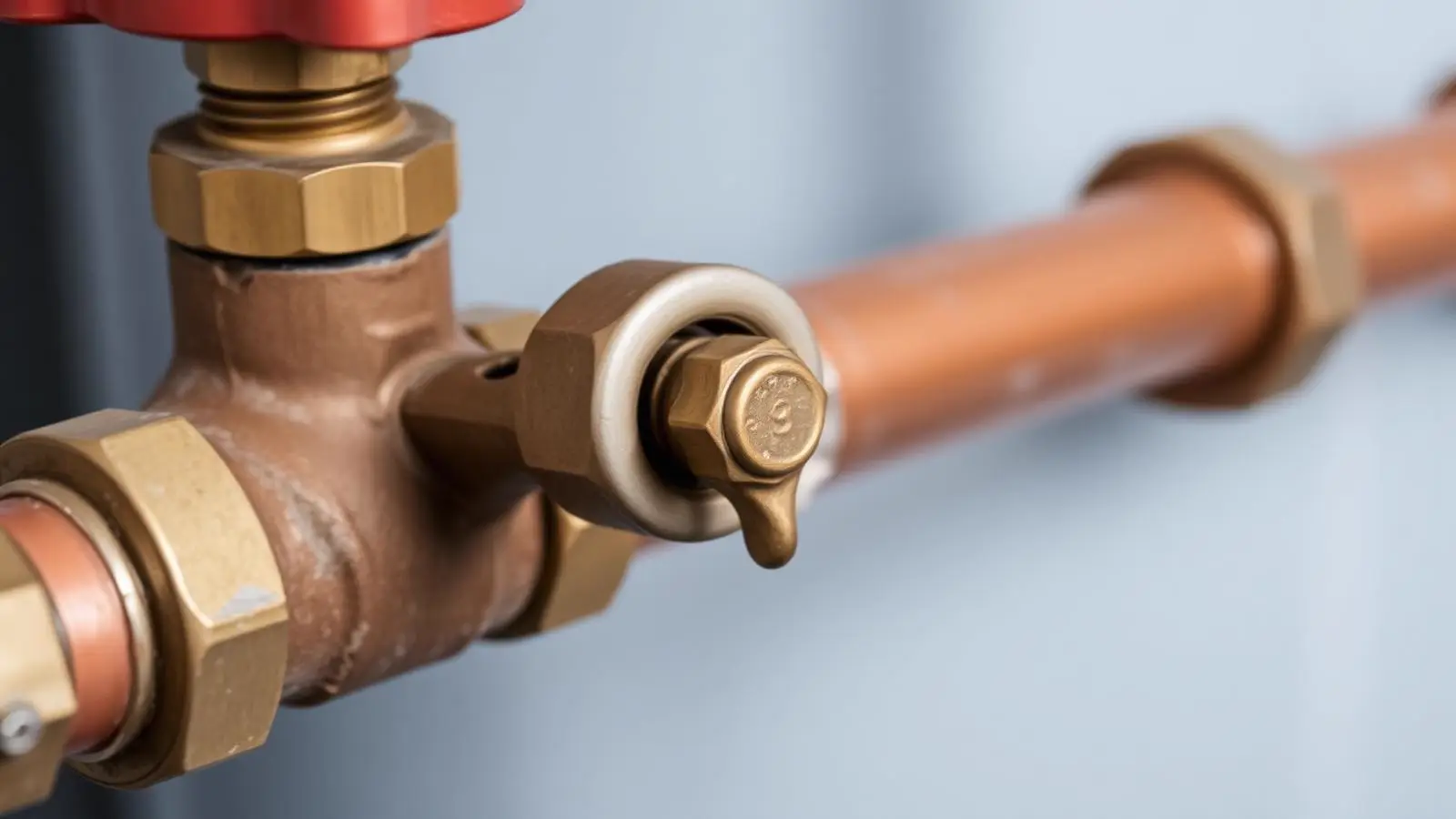
Causes, solutions and when to call a professional
Expert Answer
Locate a whistle by isolating valves one at a time: fully open the cold-water shutoff first, then test the T&P valve, then inspect the flex connectors. Whichever step changes the sound identifies the restriction causing the whistle.
How Serious Is This?
Usually Manageable
Monitor it and run the safe checks below before spending money.
This is the level for this problem: Usually safe to investigate.
Inspection Recommended
Have a professional look at it soon to prevent damage or failure.
Potentially Serious
Stop using the appliance and get professional help right away.
Most Likely Causes
- 1Step 1 — Cold-water shutoff valve not fully open
- 2Step 2 — T&P relief valve partially restricted
- 3Step 3 — Kinked or undersized flexible connector
- 4Whole-house pressure-reducing valve set too restrictively or failing
Safe Homeowner Checks
Run a hot tap and turn the cold shutoff valve fully counterclockwise while listening for the whistle to change or stop.
Takes: 2 min · Tools: None
Run a hot tap and turn the cold shutoff valve fully counterclockwise while listening for the whistle to change or stop.
Expect: Whistle stops or clearly quiets once the valve is confirmed fully open.
What it means: Change in sound confirms the valve was the restriction; no change means move to Step 2.
Next step: If resolved, leave the valve open. If not, proceed to test the T&P valve.
Place a bucket under the discharge pipe, lift the T&P test lever for one second to release a burst of water, then release and listen for whether the ongoing whistle has changed.
Takes: 3 min · Tools: Bucket
Place a bucket under the discharge pipe, lift the T&P test lever for one second to release a burst of water, then release and listen for whether the ongoing whistle has changed.
Expect: Valve reseats cleanly with no continuing whistle or drip.
What it means: A whistle that continues or a drip that persists after testing points to a worn or scaled valve.
Next step: If confirmed, schedule a T&P valve replacement. If not, proceed to Step 3.
Discharged water is near tank temperature — keep hands and skin clear of the outlet stream.
With a hot tap running, place a hand near each flex connector in turn (without touching hot metal directly) to feel for vibration, and visually check each for sharp kinks.
Takes: 4 min · Tools: Flashlight
With a hot tap running, place a hand near each flex connector in turn (without touching hot metal directly) to feel for vibration, and visually check each for sharp kinks.
Expect: Vibration and sound are strongest at one connector with a visible kink or tight bend.
What it means: Confirms that specific connector as the whistle source.
Next step: Replace the kinked or undersized connector with a correctly sized, gently routed one.
Attach a hose-bib pressure gauge to an outside spigot and take a static reading; compare it to the valve's set point if labeled.
Takes: 5 min · Tools: Water-pressure gauge
Attach a hose-bib pressure gauge to an outside spigot and take a static reading; compare it to the valve's set point if labeled.
Expect: Stable reading in the 40–80 psi range consistent with the valve's setting.
What it means: Unstable or unusually low readings point to a failing pressure-reducing valve.
Next step: Have a plumber inspect or replace the whole-house pressure-reducing valve.
Need Help With a Water Heater Making a whistling noise?
A qualified licensed plumber can confirm the cause on site, check the safety controls, and quote the repair before the problem gets more expensive.
Fast Request • Local Matching • No Obligation
Rather than guessing at a cause, the fastest path to fixing a whistling water heater is a short elimination sequence: check each valve and connector in order, listening for a change after each step. This isolates the exact restriction instead of replacing parts speculatively.
Every likely cause, ranked
- #1
Step 1 — Cold-water shutoff valve not fully open
Most common causeA valve left even slightly closed after a repair, flush, or fixture replacement creates a narrow gap that whistles under line pressure. This is the fastest check because it takes seconds and rules out the most common cause first.
Whistles that appear immediately after any plumbing work in the house are almost always traced back to this valve.
Exact symptoms
- Whistle is constant whenever any hot water fixture is open
- Started right after recent plumbing work or a tank flush
- Valve handle doesn't feel fully turned to its open stop
Self-test (2 min) — tools: None
Run a hot tap and turn the cold shutoff valve fully counterclockwise while listening for the whistle to change or stop.
Expect: Whistle stops or clearly quiets once the valve is confirmed fully open.
What it means: Change in sound confirms the valve was the restriction; no change means move to Step 2.
Next step: If resolved, leave the valve open. If not, proceed to test the T&P valve.
DIY-eligible · DIY $0 · Pro $120–$220 if the valve needs replacing · 5 minutes to test
- #2
Step 2 — T&P relief valve partially restricted
If Step 1 doesn't change the sound, the next most localized source is the T&P valve, where internal scale narrows the passage and produces a whistle as pressure nears the valve's threshold.
This step isolates the valve specifically because you're listening for a change in the whistle immediately as you actuate the test lever, separate from any general water flow noise.
Exact symptoms
- Whistle localized near the top of the tank rather than throughout the pipes
- Whistle intensity shifts noticeably right after lifting and releasing the test lever
- Any dripping at the discharge pipe outlet after testing
Self-test (3 min) — tools: Bucket
Place a bucket under the discharge pipe, lift the T&P test lever for one second to release a burst of water, then release and listen for whether the ongoing whistle has changed.
Expect: Valve reseats cleanly with no continuing whistle or drip.
What it means: A whistle that continues or a drip that persists after testing points to a worn or scaled valve.
Next step: If confirmed, schedule a T&P valve replacement. If not, proceed to Step 3.
Discharged water is near tank temperature — keep hands and skin clear of the outlet stream.
Professional repair · DIY Diagnosis only · Pro $150–$280 · 30–45 minutes
- #3
Step 3 — Kinked or undersized flexible connector
If neither the shutoff valve nor the T&P valve changes the sound, the remaining common restriction is a flex connector between the tank and rigid pipe that's kinked or too narrow for the flow it's carrying.
By elimination, a whistle that persists through Steps 1 and 2 and is loudest right at the top of the tank near the copper transition is most often the connector.
Exact symptoms
- Whistle traces to one of the two flex lines at the top of the tank
- A visible tight bend or kink in the braided connector
- Sound gets louder at higher flow rates and quieter at a trickle
Self-test (4 min) — tools: Flashlight
With a hot tap running, place a hand near each flex connector in turn (without touching hot metal directly) to feel for vibration, and visually check each for sharp kinks.
Expect: Vibration and sound are strongest at one connector with a visible kink or tight bend.
What it means: Confirms that specific connector as the whistle source.
Next step: Replace the kinked or undersized connector with a correctly sized, gently routed one.
DIY-eligible · DIY $12–$35 · Pro $130–$220 · 30–45 minutes
- #4
Whole-house pressure-reducing valve set too restrictively or failing
If the whistle is heard throughout the house rather than localized at the heater, a pressure-reducing valve on the main line that's set too low or has a worn seat can create the same flow-restriction whistle, with the water heater simply being where it's most noticeable.
Considered last because it requires the whistle to be present at fixtures unrelated to the water heater too, which the earlier localized checks would have ruled out.
Exact symptoms
- Whistle audible at fixtures throughout the house, not just near the tank
- House has a whole-house pressure-reducing valve on the main supply
- Static pressure reads unusually low or unstable
Self-test (5 min) — tools: Water-pressure gauge
Attach a hose-bib pressure gauge to an outside spigot and take a static reading; compare it to the valve's set point if labeled.
Expect: Stable reading in the 40–80 psi range consistent with the valve's setting.
What it means: Unstable or unusually low readings point to a failing pressure-reducing valve.
Next step: Have a plumber inspect or replace the whole-house pressure-reducing valve.
Professional repair · DIY $15 gauge to diagnose · Pro $250–$450 · 1–2 hours
Symptom-to-cause table
Match what you can see, hear or smell to the cause it points at, and the safe next step for that reading.
Whistle is constant whenever any hot water fixture is open
Likely cause: Step 1 — Cold-water shutoff valve not fully open
Who should handle it: Homeowner, then licensed plumber
Next step: If resolved, leave the valve open. If not, proceed to test the T&P valve.
Whistle localized near the top of the tank rather than throughout the pipes
Likely cause: Step 2 — T&P relief valve partially restricted
Who should handle it: licensed plumber
Next step: If confirmed, schedule a T&P valve replacement. If not, proceed to Step 3.
Whistle traces to one of the two flex lines at the top of the tank
Likely cause: Step 3 — Kinked or undersized flexible connector
Who should handle it: Homeowner, then licensed plumber
Next step: Replace the kinked or undersized connector with a correctly sized, gently routed one.
Whistle audible at fixtures throughout the house, not just near the tank
Likely cause: Whole-house pressure-reducing valve set too restrictively or failing
Who should handle it: licensed plumber
Next step: Have a plumber inspect or replace the whole-house pressure-reducing valve.
Ten-minute homeowner checklist
- Run a hot tap and turn the cold shutoff valve fully counterclockwise while listening for the whistle to change or stop. (2 min · None)
- Place a bucket under the discharge pipe, lift the T&P test lever for one second to release a burst of water, then release and listen for whether the ongoing whistle has changed. (3 min · Bucket)Discharged water is near tank temperature — keep hands and skin clear of the outlet stream.
- With a hot tap running, place a hand near each flex connector in turn (without touching hot metal directly) to feel for vibration, and visually check each for sharp kinks. (4 min · Flashlight)
- Attach a hose-bib pressure gauge to an outside spigot and take a static reading; compare it to the valve's set point if labeled. (5 min · Water-pressure gauge)
Never open an electrical panel, relight a burner you can smell gas near, or drain a tank that is scalding hot. Stop and call a licensed plumber instead.
What this costs to fix
| Cause | DIY cost | Professional cost | Typical time | Who should repair |
|---|---|---|---|---|
| Shutoff valve not fully open | $0 | $120–$220 | 5 minutes | Homeowner |
| Restricted T&P valve | Diagnosis only | $150–$280 | 30–45 minutes | Licensed plumber |
| Kinked flex connector | $12–$35 | $130–$220 | 30–45 minutes | Homeowner or licensed plumber |
| Whole-house pressure-reducing valve | $15 gauge | $250–$450 | 1–2 hours | Licensed plumber |
Shutoff valve not fully open
DIY cost: $0
Professional cost: $120–$220
Typical time: 5 minutes
Who should repair: Homeowner
Restricted T&P valve
DIY cost: Diagnosis only
Professional cost: $150–$280
Typical time: 30–45 minutes
Who should repair: Licensed plumber
Kinked flex connector
DIY cost: $12–$35
Professional cost: $130–$220
Typical time: 30–45 minutes
Who should repair: Homeowner or licensed plumber
Whole-house pressure-reducing valve
DIY cost: $15 gauge
Professional cost: $250–$450
Typical time: 1–2 hours
Who should repair: Licensed plumber
Possible solutions you can do safely
- Work through the isolation steps in order: shutoff valve, then T&P valve, then flex connectors.
- Fully open the cold-water shutoff valve as the first, fastest check.
- Replace an obviously kinked flex connector once identified.
- Check whole-house static pressure with a gauge if the whistle is heard at fixtures far from the tank.
Fixes that usually waste money
- Replacing parts in random order without first isolating which step changes the sound.
- Replacing the whole-house pressure-reducing valve when the whistle is actually localized at the tank.
- Ignoring a T&P valve that keeps whistling after being tested once.
When to Call a Professional
- None of the three tank-side steps change or stop the whistle.
- The whistle is heard throughout the house, suggesting a whole-house valve issue.
- The T&P valve drips or keeps whistling after being manually tested.
- You're not confident testing a T&P valve, which releases near-scalding water.
Related Home Problems
These water heater symptoms often show up with the one on this page.
why is my water heater whistling
Points at the same part of the system — both problems involve the partially.
Noises Usually safe to investigate
why is my water heater making a high pitched noise
Points at the same part of the system — both problems involve the whistle.
Noises Usually safe to investigate
why is my water heater squealing
Points at the same part of the system — both problems involve the partially.
Noises Usually safe to investigate
why is my water heater hissing
Points at the same part of the system — both problems involve the flex.
Noises Dangerous — act now
why is my water heater making a humming noise
Points at the same part of the system — both problems involve the valve.
Noises Usually safe to investigate
Still not sure what you are hearing or seeing? Browse the noises guides or the full water heater guide index with repair-cost ranges.
Frequently Asked Questions
What's the fastest way to find a water heater whistle?
Check the cold-water shutoff valve first since it takes seconds to fully open and resolves the whistle more often than any other cause. If that doesn't change anything, test the T&P valve, then inspect the flex connectors — in that order, from fastest to most involved.
Should I test the T&P valve myself?
A brief lift of the test lever is a normal homeowner-level check, but keep clear of the discharge outlet since the water released is near tank temperature. If the valve keeps whistling or dripping afterward, leave the replacement to a licensed plumber.
Why does the whistle get louder when more taps are open?
Flow-restriction whistles are velocity-dependent — the more water forced through the same narrow opening, the louder and often higher-pitched the whistle becomes. That's a useful clue that you're dealing with a restriction rather than, say, a loose part vibrating independent of flow.
Could the whistle be coming from somewhere other than the water heater?
Yes. If the isolation steps at the tank don't change the sound and the whistle is present at unrelated fixtures too, a whole-house pressure-reducing valve or a restriction elsewhere in the main line is a more likely source than the heater itself.
Sources
- International Code Council — International Plumbing Code, Sections 604–606
- American Society of Mechanical Engineers (ASME) — Temperature and Pressure Relief Valve Requirements
Ready to get this fixed?
Tell us your ZIP code and what the heater is doing. We match your request to a local licensed plumber.
Fast Request • Local Matching • No Obligation
Published 2026-08-10 · Last reviewed 2026-08-10 · Reviewed by Why Is My Water Heater? editorial team · How we research