
why is my water heater hissing
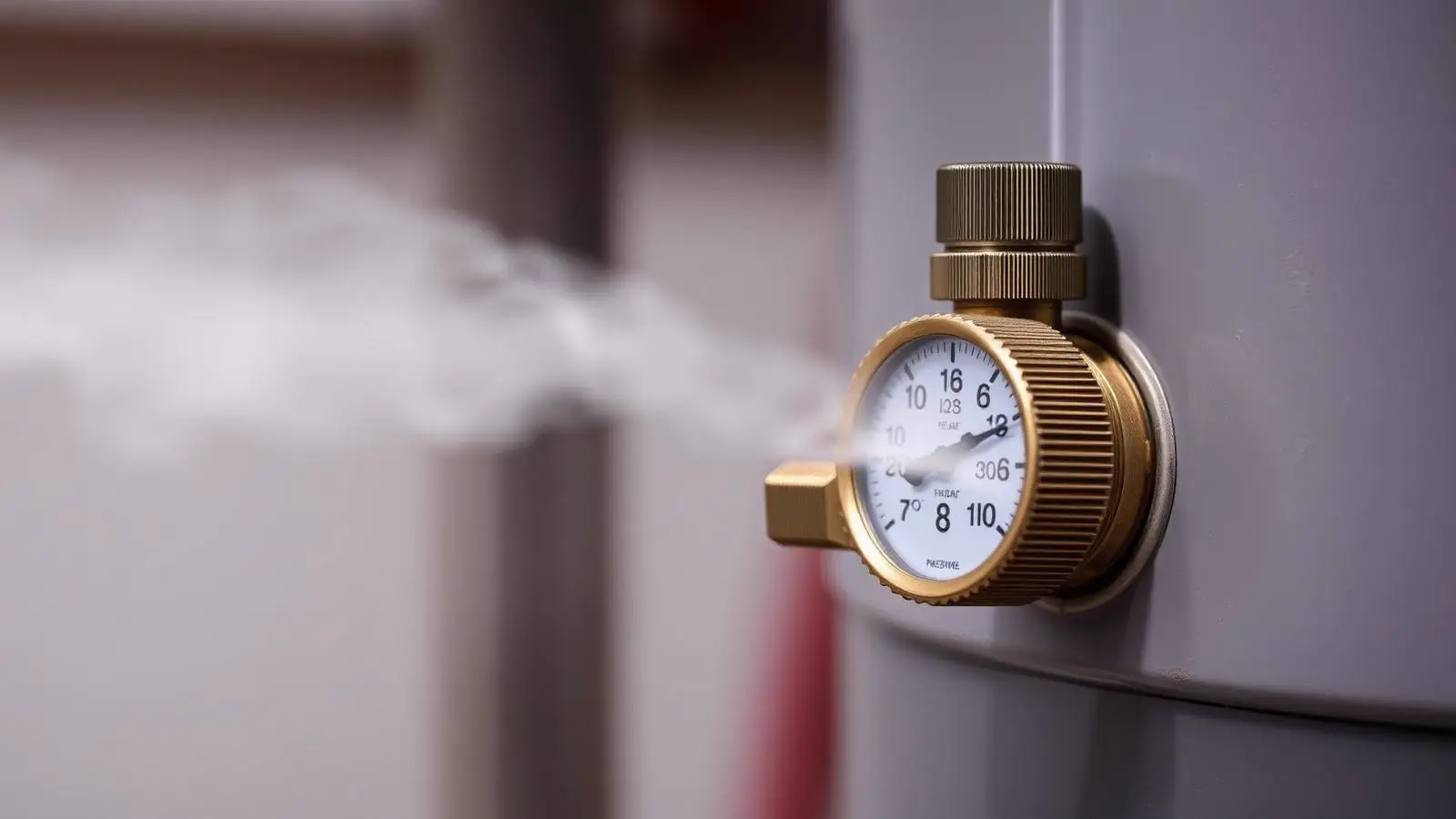
Causes, solutions and when to call a professional
Expert Answer
Hissing usually comes from sediment sizzling against a hot electric element, water weeping onto a hot burner, or the T&P valve venting. If the hiss comes from a gas fitting or you smell rotten eggs, treat it as a possible gas leak and evacuate immediately.
How Serious Is This?
Usually Manageable
Monitor it and run the safe checks below before spending money.
Inspection Recommended
Have a professional look at it soon to prevent damage or failure.
Potentially Serious
Stop using the appliance and get professional help right away.
This is the level for this problem: Dangerous — act now.
Safety warning
If hissing is near gas connections, the gas control valve, or the flex line — or if you smell a rotten-egg or sulfur odor — do not flip switches, light anything, or search for the leak yourself. Leave the area, evacuate the building, and call your gas utility's emergency line or 911 from outside.
Most Likely Causes
- 1Gas leak at a fitting, flex line, or control valve (gas units — check first)
- 2Sediment sizzling against a hot electric heating element
- 3Water dripping onto a hot gas burner (condensation or a slow leak)
- 4Temperature and pressure relief valve venting slightly
Safe Homeowner Checks
Do not use a flame or lighter.
Takes: 5 min · Tools: Dish soap and water (only if no gas odor is present)
Do not use a flame or lighter. If you smell gas, stop testing immediately, leave the building, and call your gas utility's emergency line from outside. Only if there is no odor at all, mix a few drops of dish soap in water and brush it on accessible gas fittings, watching for bubbles.
Expect: No odor and no soap bubbles at any fitting.
What it means: Any rotten-egg smell, or bubbles forming at a fitting, confirms a gas leak requiring immediate evacuation and professional shutoff.
Next step: If gas is suspected, leave immediately, do not operate switches or phones inside, and call the gas utility emergency number or 911 from a safe distance.
Never attempt to tighten or repair a gas fitting yourself while gas may be escaping. This is the one water heater symptom that justifies leaving the house immediately.
After confirming there is no gas odor, turn off power at the breaker, let the tank cool, then open the drain valve briefly into a bucket and check for gray or white grit.
Takes: 5 min · Tools: Bucket
After confirming there is no gas odor, turn off power at the breaker, let the tank cool, then open the drain valve briefly into a bucket and check for gray or white grit.
Expect: Gritty, cloudy first water confirms scale buildup on or near the elements.
What it means: Sediment on the lower element is the likely hiss source.
Next step: Flush the tank fully, then descale or replace the lower element if hissing continues.
With the burner off and no gas odor present, open the lower burner access panel and look with a flashlight for moisture, rust, or drip marks on or above the burner assembly.
Takes: 5 min · Tools: Flashlight
With the burner off and no gas odor present, open the lower burner access panel and look with a flashlight for moisture, rust, or drip marks on or above the burner assembly.
Expect: Dry burner compartment with no drip marks.
What it means: Visible moisture confirms a leak or condensation source dripping onto the burner rather than a gas issue.
Next step: Trace and repair the drip source above the compartment; do not run the heater until dry.
Water and an open gas flame in the same compartment is a fire and corrosion risk — don't ignore a wet burner box.
Screw a hose-bib pressure gauge onto an outside spigot and read static pressure, then read again right after a full heating cycle.
Takes: 8 min · Tools: Water-pressure gauge
Screw a hose-bib pressure gauge onto an outside spigot and read static pressure, then read again right after a full heating cycle.
Expect: Pressure stays under 80 psi static and rises no more than 10 psi after heating.
What it means: High or spiking pressure explains a hissing T&P valve doing its job.
Next step: Add a thermal expansion tank and/or a pressure-reducing valve; never block the T&P discharge.
Need Help With a Water Heater Hissing?
A qualified gas appliance technician can confirm the cause on site, check the safety controls, and quote the repair before the problem gets more expensive.
Fast Request • Local Matching • No Obligation
Hissing has several harmless explanations, but it is also the sound a gas leak can make at a fitting or valve. Before troubleshooting sediment or condensation, always rule out gas first if the heater is gas-fired — the cost of being wrong about a gas leak is far higher than a wasted service call.
Every likely cause, ranked
- #1
Gas leak at a fitting, flex line, or control valve (gas units — check first)
Most common causeA loose flare fitting, a worn flex connector, or a failing gas control valve can allow small amounts of natural gas or propane to escape, producing a faint hiss along with the characteristic rotten-egg mercaptan odor added to the gas for detection.
It must be ruled out first on any gas unit precisely because it is the one hissing cause that is immediately dangerous, even though it's less common than sediment or condensation noises.
Exact symptoms
- Rotten-egg or sulfur smell near the heater, especially near fittings
- Hissing localized at the gas control valve, flex connector, or shutoff valve rather than the tank body
- Hiss present even when the burner is off and no water is running
Self-test (5 min) — tools: Dish soap and water (only if no gas odor is present)
Do not use a flame or lighter. If you smell gas, stop testing immediately, leave the building, and call your gas utility's emergency line from outside. Only if there is no odor at all, mix a few drops of dish soap in water and brush it on accessible gas fittings, watching for bubbles.
Expect: No odor and no soap bubbles at any fitting.
What it means: Any rotten-egg smell, or bubbles forming at a fitting, confirms a gas leak requiring immediate evacuation and professional shutoff.
Next step: If gas is suspected, leave immediately, do not operate switches or phones inside, and call the gas utility emergency number or 911 from a safe distance.
Never attempt to tighten or repair a gas fitting yourself while gas may be escaping. This is the one water heater symptom that justifies leaving the house immediately.
Professional repair · DIY Not applicable — safety issue · Pro $150–$400 for fitting or valve replacement after utility shutoff · 1–3 hours after the area is declared safe
- #2
Sediment sizzling against a hot electric heating element
Mineral scale coats the lower heating element in an electric tank. Water trapped in tiny pockets within that scale flashes to steam against the hot element surface, producing a sharp hiss or sizzle similar to water on a hot skillet.
Very common on electric tanks with any scale buildup and is the most frequent non-gas explanation for a hissing sound, especially right after the element cycles on.
Exact symptoms
- Hissing or sizzling starts right when the heating cycle begins, on an electric unit
- Sound is inside the tank, not at any fitting or valve
- No gas odor, unit is electric or hissing is clearly separate from any gas line
Self-test (5 min) — tools: Bucket
After confirming there is no gas odor, turn off power at the breaker, let the tank cool, then open the drain valve briefly into a bucket and check for gray or white grit.
Expect: Gritty, cloudy first water confirms scale buildup on or near the elements.
What it means: Sediment on the lower element is the likely hiss source.
Next step: Flush the tank fully, then descale or replace the lower element if hissing continues.
DIY-eligible · DIY $0 flush, $15–$35 replacement element · Pro $150–$250 · 1–2 hours
- #3
Water dripping onto a hot gas burner (condensation or a slow leak)
Condensation forming on the tank or a slow drip from a fitting above the burner compartment can land on the hot burner or flue baffle, flashing to steam with an audible hiss.
Common on gas units in humid conditions or when a fitting above the burner is weeping slightly, and it's distinguishable from a gas leak by the absence of any sulfur odor.
Exact symptoms
- Hissing comes specifically from the burner compartment, timed with active burner operation
- No gas odor, but a damp spot or drip is visible above the burner
- Hiss stops once the burner shuts off
Self-test (5 min) — tools: Flashlight
With the burner off and no gas odor present, open the lower burner access panel and look with a flashlight for moisture, rust, or drip marks on or above the burner assembly.
Expect: Dry burner compartment with no drip marks.
What it means: Visible moisture confirms a leak or condensation source dripping onto the burner rather than a gas issue.
Next step: Trace and repair the drip source above the compartment; do not run the heater until dry.
Water and an open gas flame in the same compartment is a fire and corrosion risk — don't ignore a wet burner box.
Professional repair · DIY Diagnosis only · Pro $150–$350 · 1–2 hours
- #4
Temperature and pressure relief valve venting slightly
The T&P valve can hiss softly as it begins to weep at pressures approaching its 150 psi threshold, before fully opening into an audible discharge.
Likely if the hiss is localized at the valve body or discharge pipe and coincides with the end of a heating cycle, when tank pressure peaks.
Exact symptoms
- Faint hiss from the valve body or discharge pipe near the top of the tank
- Timed with the end of a heating cycle
- May be accompanied by a few drops of water at the discharge pipe outlet
Self-test (8 min) — tools: Water-pressure gauge
Screw a hose-bib pressure gauge onto an outside spigot and read static pressure, then read again right after a full heating cycle.
Expect: Pressure stays under 80 psi static and rises no more than 10 psi after heating.
What it means: High or spiking pressure explains a hissing T&P valve doing its job.
Next step: Add a thermal expansion tank and/or a pressure-reducing valve; never block the T&P discharge.
Professional repair · DIY $15 gauge to diagnose · Pro $175–$450 · 1–2 hours
Symptom-to-cause table
Match what you can see, hear or smell to the cause it points at, and the safe next step for that reading.
Rotten-egg or sulfur smell near the heater, especially near fittings
Likely cause: Gas leak at a fitting, flex line, or control valve (gas units — check first)
Who should handle it: gas appliance technician
Next step: If gas is suspected, leave immediately, do not operate switches or phones inside, and call the gas utility emergency number or 911 from a safe distance.
Hissing or sizzling starts right when the heating cycle begins, on an electric unit
Likely cause: Sediment sizzling against a hot electric heating element
Who should handle it: Homeowner, then gas appliance technician
Next step: Flush the tank fully, then descale or replace the lower element if hissing continues.
Hissing comes specifically from the burner compartment, timed with active burner operation
Likely cause: Water dripping onto a hot gas burner (condensation or a slow leak)
Who should handle it: gas appliance technician
Next step: Trace and repair the drip source above the compartment; do not run the heater until dry.
Faint hiss from the valve body or discharge pipe near the top of the tank
Likely cause: Temperature and pressure relief valve venting slightly
Who should handle it: gas appliance technician
Next step: Add a thermal expansion tank and/or a pressure-reducing valve; never block the T&P discharge.
Ten-minute homeowner checklist
- Do not use a flame or lighter. (5 min · Dish soap and water (only if no gas odor is present))Never attempt to tighten or repair a gas fitting yourself while gas may be escaping. This is the one water heater symptom that justifies leaving the house immediately.
- After confirming there is no gas odor, turn off power at the breaker, let the tank cool, then open the drain valve briefly into a bucket and check for gray or white grit. (5 min · Bucket)
- With the burner off and no gas odor present, open the lower burner access panel and look with a flashlight for moisture, rust, or drip marks on or above the burner assembly. (5 min · Flashlight)Water and an open gas flame in the same compartment is a fire and corrosion risk — don't ignore a wet burner box.
- Screw a hose-bib pressure gauge onto an outside spigot and read static pressure, then read again right after a full heating cycle. (8 min · Water-pressure gauge)
Never open an electrical panel, relight a burner you can smell gas near, or drain a tank that is scalding hot. Stop and call a gas appliance technician instead.
What this costs to fix
| Cause | DIY cost | Professional cost | Typical time | Who should repair |
|---|---|---|---|---|
| Gas leak at a fitting or valve | Not applicable | $150–$400 after utility shutoff | 1–3 hours | Gas utility, then gas appliance technician |
| Sediment sizzling on an electric element | $0–$35 | $150–$250 | 1–2 hours | Homeowner or electrician/water-heater technician |
| Water dripping onto a gas burner | Diagnosis only | $150–$350 | 1–2 hours | Gas appliance technician |
| T&P valve venting from high pressure | $15 gauge | $175–$450 | 1–2 hours | Licensed plumber |
Gas leak at a fitting or valve
DIY cost: Not applicable
Professional cost: $150–$400 after utility shutoff
Typical time: 1–3 hours
Who should repair: Gas utility, then gas appliance technician
Sediment sizzling on an electric element
DIY cost: $0–$35
Professional cost: $150–$250
Typical time: 1–2 hours
Who should repair: Homeowner or electrician/water-heater technician
Water dripping onto a gas burner
DIY cost: Diagnosis only
Professional cost: $150–$350
Typical time: 1–2 hours
Who should repair: Gas appliance technician
T&P valve venting from high pressure
DIY cost: $15 gauge
Professional cost: $175–$450
Typical time: 1–2 hours
Who should repair: Licensed plumber
Possible solutions you can do safely
- If there is any rotten-egg odor, skip DIY entirely — leave the building and call the gas utility.
- Flush an electric tank and check the first water for grit if hissing is clearly not gas-related.
- Check a hose-bib pressure gauge if the hiss is localized to the T&P valve.
- Visually inspect (without touching) the burner compartment for moisture on gas units, with the burner off.
Fixes that usually waste money
- Spraying air freshener or masking a sulfur smell instead of evacuating and calling the gas utility.
- Replacing the T&P valve without first checking whether house pressure exceeds 80 psi.
- Replacing a heating element before flushing the tank to confirm sediment is actually present.
When to Call a Professional
- Any rotten-egg or sulfur odor near the heater — evacuate and call the gas utility immediately, no exceptions.
- Hissing is localized at a gas fitting or valve even without a strong odor.
- Moisture is found in the burner compartment of a gas unit.
- Hissing continues after a flush and pressure check rule out sediment and the T&P valve.
Related Home Problems
These water heater symptoms often show up with the one on this page.
why is my water heater whistling
Points at the same part of the system — both problems involve the shutoff.
Noises Usually safe to investigate
why is my water heater making a whistling noise
Points at the same part of the system — both problems involve the shutoff.
Noises Usually safe to investigate
why is my water heater popping
Points at the same part of the system — both problems involve the sediment.
Noises Repair soon
why is my water heater pressure relief valve leaking
Points at the same part of the system — both problems involve the pressure.
Leaks & Water Pressure Repair soon
why is my water heater so loud
Points at the same part of the system — both problems involve the sediment.
Noises Repair soon
Still not sure what you are hearing or seeing? Browse the noises guides or the full water heater guide index with repair-cost ranges.
Frequently Asked Questions
Is hissing from my water heater always a gas leak?
No. Sediment sizzling on an electric element, condensation dripping onto a gas burner, and a T&P valve venting slightly at high pressure are all more common than a gas leak. But because a gas leak is the one dangerous cause, always check for a rotten-egg odor first before assuming it's harmless.
What does a gas leak actually smell like?
Utilities add a chemical called mercaptan to natural gas and propane specifically so leaks smell like rotten eggs or sulfur, since the gas itself is odorless. Any trace of that smell near the heater warrants leaving the building immediately, not investigating further indoors.
Can I use a lighter or match to check for a gas leak?
Never. Open flames or sparks near escaping gas can ignite it. Use the soap-and-water bubble test only when there is no gas odor present, and rely on a professional gas detector or the utility company for any situation where you smell gas.
Why does my water heater hiss right when the heating cycle starts?
On electric tanks, this timing points to sediment on the lower element flashing trapped water into steam. On gas tanks, it more often points to condensation or a slow drip contacting the burner as it ignites.
Sources
- National Fire Protection Association — NFPA 54 — National Fuel Gas Code
- U.S. Occupational Safety and Health Administration — Natural Gas Leak Detection and Response
Ready to get this fixed?
Tell us your ZIP code and what the heater is doing. We match your request to a local gas appliance technician.
Fast Request • Local Matching • No Obligation
Published 2026-08-10 · Last reviewed 2026-08-10 · Reviewed by Why Is My Water Heater? editorial team · How we research