
why is my water heater leaking water
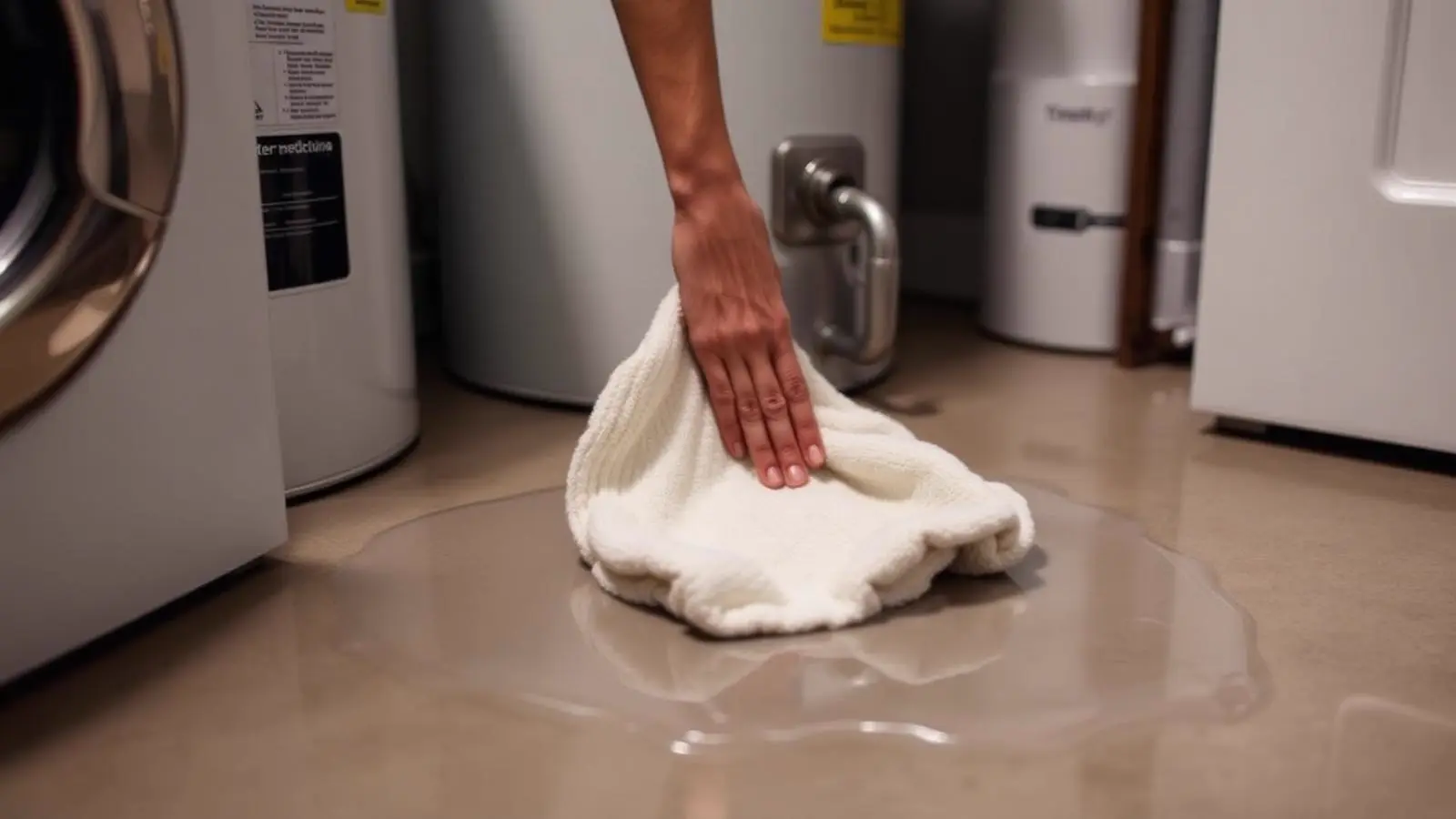
Causes, solutions and when to call a professional
Expert Answer
Water near a heater often comes from an AC condensate line, a nearby washing-machine hose, or a softener drain — not the heater itself. Trace the water uphill to its highest wet point; if that point is on the tank or its fittings, the heater is the source.
How Serious Is This?
Usually Manageable
Monitor it and run the safe checks below before spending money.
Inspection Recommended
Have a professional look at it soon to prevent damage or failure.
This is the level for this problem: Repair soon.
Potentially Serious
Stop using the appliance and get professional help right away.
Safety warning
If the water is anywhere near an electrical panel, outlet, or the heater's junction box, cut power at the breaker before you touch anything wet.
Most Likely Causes
- 1Water is actually from a nearby appliance, not the heater
- 2Loose or corroded supply-line fittings at the tank
- 3T&P relief valve discharging
- 4Internal tank corrosion
Safe Homeowner Checks
Lay dry paper towels in a grid across the whole floor area, including a foot beyond the heater in every direction.
Takes: 10 min · Tools: Paper towels, Flashlight
Lay dry paper towels in a grid across the whole floor area, including a foot beyond the heater in every direction. Run the AC or washer for its normal cycle, then check which towels are wet first.
Expect: Wet towels closest to the true source appear first and spread outward from there.
What it means: If the first wet towels are away from the heater base, another appliance is the source, not the water heater.
Next step: Follow the wet trail to its origin and address that appliance's drain line or hose instead.
Dry the top fittings, wrap a folded paper towel around each connection, run hot water for two minutes, then inspect.
Takes: 6 min · Tools: Towel, Paper towel
Dry the top fittings, wrap a folded paper towel around each connection, run hot water for two minutes, then inspect.
Expect: Dry paper on sound fittings, damp or wet paper on the leaking one.
What it means: A wet fitting confirms the water heater — specifically the connection — as the source.
Next step: Tighten a quarter turn with two wrenches; replace the fitting if it still weeps.
Attach a hose-bib pressure gauge to an outside spigot and read static pressure, then again right after a heating cycle.
Takes: 8 min · Tools: Water-pressure gauge
Attach a hose-bib pressure gauge to an outside spigot and read static pressure, then again right after a heating cycle.
Expect: Static pressure of 40–80 psi with less than a 10 psi rise after heating.
What it means: Readings above 80 psi confirm the valve is discharging correctly in response to excess pressure.
Next step: Install or recharge a thermal expansion tank and consider a pressure-reducing valve.
Never cap or plug the T&P discharge line under any circumstance.
Dry the floor completely, tape white paper under the tank base, wait one hour of normal use, then check for rust-colored moisture.
Takes: 5 min · Tools: Towel, White paper, Tape
Dry the floor completely, tape white paper under the tank base, wait one hour of normal use, then check for rust-colored moisture.
Expect: Paper stays dry if the tank body is sound.
What it means: Rust-stained dampness confirms a perforated tank.
Next step: Shut off water and power/gas, and get replacement quotes immediately.
A corroded tank can fail suddenly and release its full contents without warning.
Utility closets and basements are crowded — a furnace condensate line, a softener drain, a sump pump, and a water heater often share the same few square feet of floor. Before diagnosing a heater leak, confirm the water is actually coming from the heater and not a neighboring appliance a few feet away.
Every likely cause, ranked
- #1
Water is actually from a nearby appliance, not the heater
Most common causeAC/furnace condensate lines, water softener regeneration drains, and washing machine supply hoses commonly route near or across the water heater's floor space. A slow drip or overflow from any of them mimics a heater leak.
It is the single most common reason a 'water heater leak' turns out to require no plumber at all — misdiagnosis wastes a service call.
Exact symptoms
- Wet spot is offset to one side of the heater, not centered under it
- Water appears only when the AC, furnace, or washer runs
- A condensate line, PVC drain, or hose is visible running near the heater
Self-test (10 min) — tools: Paper towels, Flashlight
Lay dry paper towels in a grid across the whole floor area, including a foot beyond the heater in every direction. Run the AC or washer for its normal cycle, then check which towels are wet first.
Expect: Wet towels closest to the true source appear first and spread outward from there.
What it means: If the first wet towels are away from the heater base, another appliance is the source, not the water heater.
Next step: Follow the wet trail to its origin and address that appliance's drain line or hose instead.
DIY-eligible · DIY $0–$15 for paper towels and a flashlight · Pro $0 if self-diagnosed · 10–15 minutes to confirm
- #2
Loose or corroded supply-line fittings at the tank
Threaded nipples, unions, and flex connectors at the top of the tank loosen from thermal cycling and corrode where dissimilar metals meet, letting water track down the jacket to the floor.
This is the most common true water-heater leak once other appliances are ruled out, and it produces exactly the same puddle appearance as a tank failure.
Exact symptoms
- Wet streak running down the side of the tank from the top fittings
- Puddle centered directly under the tank, not offset
- Green or white mineral crust visible on a fitting
Self-test (6 min) — tools: Towel, Paper towel
Dry the top fittings, wrap a folded paper towel around each connection, run hot water for two minutes, then inspect.
Expect: Dry paper on sound fittings, damp or wet paper on the leaking one.
What it means: A wet fitting confirms the water heater — specifically the connection — as the source.
Next step: Tighten a quarter turn with two wrenches; replace the fitting if it still weeps.
DIY-eligible · DIY $12–$45 · Pro $150–$300 · 30–60 minutes
- #3
T&P relief valve discharging
Excess pressure or thermal expansion opens the temperature and pressure relief valve, sending water down its discharge tube to the floor near the base of the heater.
It produces a puddle at the base that looks identical to a tank failure but is actually a pressure problem elsewhere in the plumbing.
Exact symptoms
- Water pools at the open end of a pipe near the floor, not directly under the tank body
- Occurs after long heating cycles
- A hissing or popping sound accompanies the discharge
Self-test (8 min) — tools: Water-pressure gauge
Attach a hose-bib pressure gauge to an outside spigot and read static pressure, then again right after a heating cycle.
Expect: Static pressure of 40–80 psi with less than a 10 psi rise after heating.
What it means: Readings above 80 psi confirm the valve is discharging correctly in response to excess pressure.
Next step: Install or recharge a thermal expansion tank and consider a pressure-reducing valve.
Never cap or plug the T&P discharge line under any circumstance.
Professional repair · DIY $15 gauge to diagnose · Pro $175–$450 · 1–2 hours
- #4
Internal tank corrosion
After the sacrificial anode rod is consumed, bare steel inside the tank rusts through, and water seeps continuously from the tank body itself rather than a fitting.
On a heater older than eight years with no other identifiable source, this is the default explanation and means replacement, not repair.
Exact symptoms
- Water reappears under the center of the tank base minutes after drying it
- Rust-tinted water
- No fitting, valve, or nearby appliance tests positive as the source
Self-test (5 min) — tools: Towel, White paper, Tape
Dry the floor completely, tape white paper under the tank base, wait one hour of normal use, then check for rust-colored moisture.
Expect: Paper stays dry if the tank body is sound.
What it means: Rust-stained dampness confirms a perforated tank.
Next step: Shut off water and power/gas, and get replacement quotes immediately.
A corroded tank can fail suddenly and release its full contents without warning.
Professional repair · DIY Not repairable · Pro $1,200–$2,500 installed replacement · 3–5 hours
Symptom-to-cause table
Match what you can see, hear or smell to the cause it points at, and the safe next step for that reading.
Wet spot is offset to one side of the heater, not centered under it
Likely cause: Water is actually from a nearby appliance, not the heater
Who should handle it: Homeowner, then licensed plumber
Next step: Follow the wet trail to its origin and address that appliance's drain line or hose instead.
Wet streak running down the side of the tank from the top fittings
Likely cause: Loose or corroded supply-line fittings at the tank
Who should handle it: Homeowner, then licensed plumber
Next step: Tighten a quarter turn with two wrenches; replace the fitting if it still weeps.
Water pools at the open end of a pipe near the floor, not directly under the tank body
Likely cause: T&P relief valve discharging
Who should handle it: licensed plumber
Next step: Install or recharge a thermal expansion tank and consider a pressure-reducing valve.
Water reappears under the center of the tank base minutes after drying it
Likely cause: Internal tank corrosion
Who should handle it: licensed plumber
Next step: Shut off water and power/gas, and get replacement quotes immediately.
Ten-minute homeowner checklist
- Lay dry paper towels in a grid across the whole floor area, including a foot beyond the heater in every direction. (10 min · Paper towels, Flashlight)
- Dry the top fittings, wrap a folded paper towel around each connection, run hot water for two minutes, then inspect. (6 min · Towel, Paper towel)
- Attach a hose-bib pressure gauge to an outside spigot and read static pressure, then again right after a heating cycle. (8 min · Water-pressure gauge)Never cap or plug the T&P discharge line under any circumstance.
- Dry the floor completely, tape white paper under the tank base, wait one hour of normal use, then check for rust-colored moisture. (5 min · Towel, White paper, Tape)A corroded tank can fail suddenly and release its full contents without warning.
Never open an electrical panel, relight a burner you can smell gas near, or drain a tank that is scalding hot. Stop and call a licensed plumber instead.
What this costs to fix
| Cause | DIY cost | Professional cost | Typical time | Who should repair |
|---|---|---|---|---|
| Water from a nearby appliance, not the heater | $0 | $0 | 10–15 minutes | Homeowner |
| Loose or corroded supply-line fittings | $12–$45 | $150–$300 | 30–60 minutes | Homeowner or licensed plumber |
| T&P valve discharging | $15 gauge | $175–$450 | 1–2 hours | Licensed plumber |
| Internal tank corrosion | Not repairable | $1,200–$2,500 | 3–5 hours | Licensed plumber |
Water from a nearby appliance, not the heater
DIY cost: $0
Professional cost: $0
Typical time: 10–15 minutes
Who should repair: Homeowner
Loose or corroded supply-line fittings
DIY cost: $12–$45
Professional cost: $150–$300
Typical time: 30–60 minutes
Who should repair: Homeowner or licensed plumber
T&P valve discharging
DIY cost: $15 gauge
Professional cost: $175–$450
Typical time: 1–2 hours
Who should repair: Licensed plumber
Internal tank corrosion
DIY cost: Not repairable
Professional cost: $1,200–$2,500
Typical time: 3–5 hours
Who should repair: Licensed plumber
Possible solutions you can do safely
- Lay a paper-towel grid to trace the true source before assuming the heater is at fault.
- Tighten loose union nuts a quarter turn with two wrenches.
- Check and clear a nearby AC condensate line or softener drain hose.
- Lower the thermostat to 120 °F to reduce thermal-expansion pressure.
Fixes that usually waste money
- Calling a plumber for a water heater inspection when the actual source is an HVAC condensate line a few feet away.
- Replacing the whole heater before confirming which fitting or valve is actually wet.
- Sealant or tape on a fitting whose thread is already stripped or corroded through.
When to Call a Professional
- Water traces back to the tank base itself rather than a fitting or nearby appliance.
- The T&P valve discharges repeatedly even after a pressure-reducing valve is installed.
- Standing water is near an electrical panel or the heater's own wiring.
- You cannot identify the source after 15 minutes of tracing.
Related Home Problems
These water heater symptoms often show up with the one on this page.
why is my water heater leaking
Points at the same part of the system — both problems involve the corroded.
Leaks & Water Pressure Repair soon
why is my water heater leaking?
Points at the same part of the system — both problems involve the valve.
Leaks & Water Pressure Repair soon
why is my water heater leaking from the top
Points at the same part of the system — both problems involve the corroded.
Leaks & Water Pressure Repair soon
why is my water heater leaking from the bottom
Points at the same part of the system — both problems involve the drain.
Leaks & Water Pressure Repair soon
why is my water heater dripping
Points at the same part of the system — both problems involve the valve.
Leaks & Water Pressure Usually safe to investigate
Still not sure what you are hearing or seeing? Browse the leaks & water pressure guides or the full water heater guide index with repair-cost ranges.
Frequently Asked Questions
How do I know if water on the floor is from my water heater or something else?
Lay dry paper towels in a grid across the floor, including areas a foot beyond the heater, run any nearby appliances (AC, washer, softener), and see which towels wet first. Water that appears at the heater's fittings or base before anywhere else confirms the heater as the source.
Can a water heater leak without any visible crack?
Yes. Most leaks come from threaded fittings, valves, or a discharging relief valve rather than a cracked tank. A cracked or perforated tank is usually the least common cause and typically shows up only after years of use.
Is a small amount of water around the heater dangerous?
It's not dangerous by itself, but water pooling near an electrical junction box or outlet is a shock risk — cut power at the breaker before investigating. A slow leak can also rot flooring or subfloor if left unaddressed.
Should I turn off my water heater if I find water on the floor?
If the source is confirmed as the heater and the leak is active, shut the cold-water supply valve and turn off power or gas until it's repaired. If the source turns out to be another appliance, the heater itself does not need to be shut down.
Sources
- U.S. Environmental Protection Agency — WaterSense — Fixing Household Leaks
- U.S. Department of Energy — Water Heating — Storage Water Heaters and Maintenance
Published 2026-08-10 · Last reviewed 2026-08-10 · Reviewed by Why Is My Water Heater? editorial team · How we research