
why is my water heater making noise
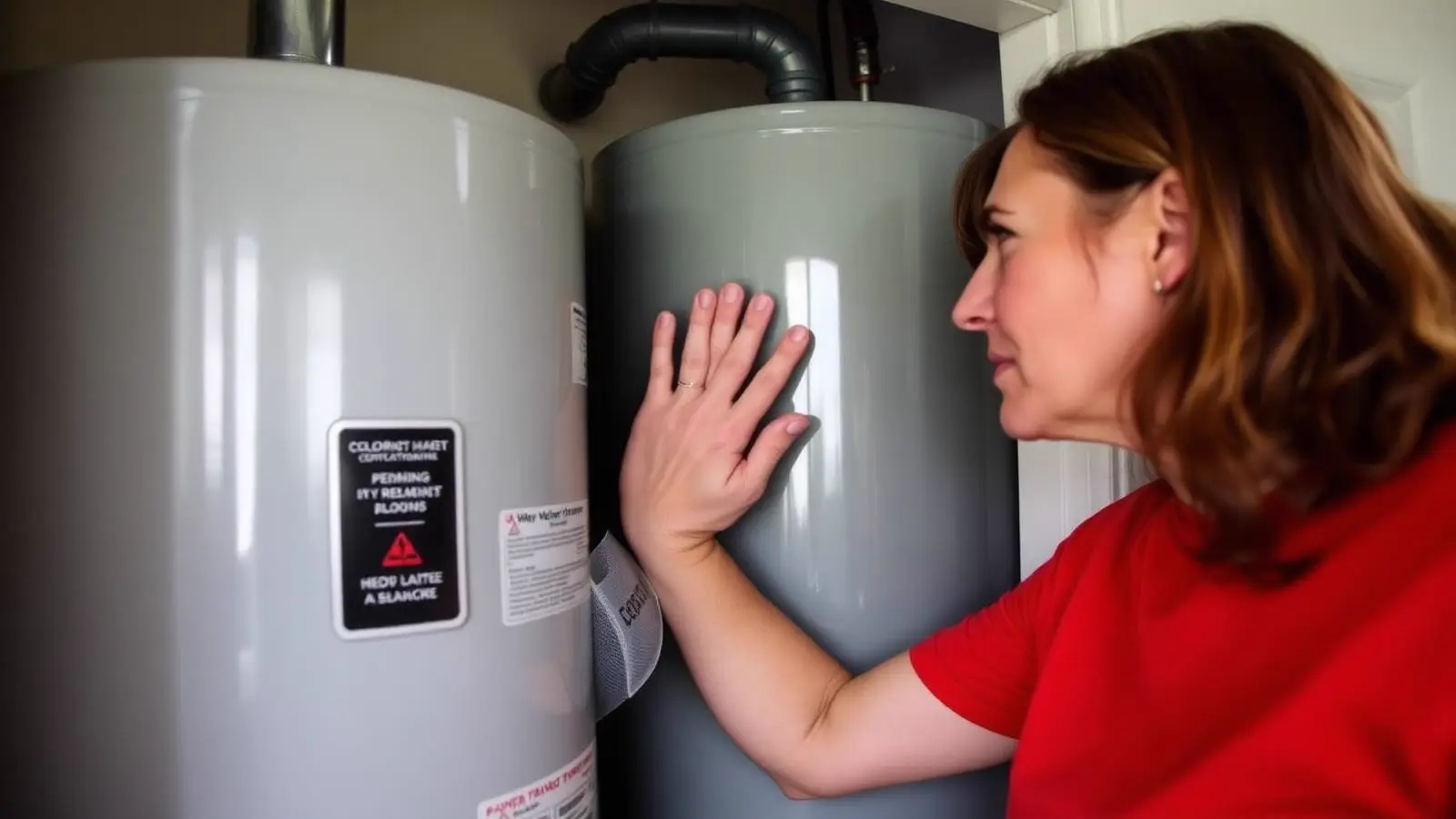
Causes, solutions and when to call a professional
Expert Answer
Most water heater noises trace to sediment (popping, rumbling), pressure or flow (hissing, whistling), electrical components (humming, buzzing), or pipe movement (knocking, ticking). Identify the exact sound to narrow the cause before calling anyone.
How Serious Is This?
Usually Manageable
Monitor it and run the safe checks below before spending money.
Inspection Recommended
Have a professional look at it soon to prevent damage or failure.
This is the level for this problem: Repair soon.
Potentially Serious
Stop using the appliance and get professional help right away.
Safety warning
A hissing sound near the top of a gas unit combined with a rotten-egg smell can indicate a gas leak. Leave the area and call your gas utility from outside if you smell gas alongside any noise.
Most Likely Causes
- 1Sediment popping and rumbling
- 2Hissing or whistling from pressure or a small leak
- 3Humming or buzzing from an electrical component
- 4Knocking or ticking from pipe movement (water hammer)
Safe Homeowner Checks
Turn the thermostat up 10 °F and stand near the tank while it fires.
Takes: 6 min · Tools: None
Turn the thermostat up 10 °F and stand near the tank while it fires. Listen for 3–5 minutes as the burner or elements run.
Expect: Popping or a rumbling boil sound synced to the heating cycle, quiet once it satisfies.
What it means: Sediment buildup on the tank floor or heating elements.
Next step: Schedule a tank flush; return the thermostat to 120 °F afterward.
Dry all visible fittings and the T&P discharge pipe, then listen and look for 5 minutes without running water anywhere in the house.
Takes: 5 min · Tools: Towel, Flashlight
Dry all visible fittings and the T&P discharge pipe, then listen and look for 5 minutes without running water anywhere in the house.
Expect: A dry, quiet tank with no water use running.
What it means: Continued hissing with no water use points to pressure escaping through a valve or leak.
Next step: Check static pressure with a hose-bib gauge; have a plumber inspect if above 80 psi.
Never cap or block a T&P discharge line, even if it is the source of the hiss.
With power on, place a hand flat on the lower access panel while the unit is heating (panel only, never open it) and feel for vibration matching the hum.
Takes: 3 min · Tools: None
With power on, place a hand flat on the lower access panel while the unit is heating (panel only, never open it) and feel for vibration matching the hum.
Expect: Vibration felt directly at the panel confirms an internal electrical source.
What it means: A loose element or failing thermostat is the likely cause.
Next step: Shut off breaker power and have an electrician or technician tighten element connections and test the thermostat.
Do not remove the access panel with power connected; 240V is present at the element terminals.
Trace the loudest point of the knock by hand along the visible supply pipe near the heater, then run a nearby fixture and shut it off quickly to test for hammer.
Takes: 5 min · Tools: Flashlight
Trace the loudest point of the knock by hand along the visible supply pipe near the heater, then run a nearby fixture and shut it off quickly to test for hammer.
Expect: A distinct bang at valve shutoff confirms water hammer; a soft tick during cooling confirms pipe expansion.
What it means: Loose pipe straps or missing water-hammer arrestors.
Next step: Add foam pipe insulation at contact points or install a water-hammer arrestor near the noisy fixture.
Need Help With a Water Heater Making noise?
A qualified licensed plumber or water-heater technician can confirm the cause on site, check the safety controls, and quote the repair before the problem gets more expensive.
Fast Request • Local Matching • No Obligation
Water heaters are not silent appliances — a soft tick or a light hum during heating is normal. This page is a sound-matching index: pick the noise closest to what you are hearing, then jump to the dedicated page below for the deeper diagnosis. Below is the fast overview of what each family of sound usually means.
Every likely cause, ranked
- #1
Sediment popping and rumbling
Most common causeMinerals in tap water settle to the tank bottom and bake into a hard layer over the burner or lower heating element. Water trapped under that layer boils into steam pockets that burst upward through the sediment, producing pops or a low rumble.
It is the single most common water heater noise complaint, especially on units past three years old that have never been flushed.
Exact symptoms
- Popping, cracking, or a rolling-boil rumble during the heating cycle
- Noise is loudest right after the burner or elements kick on
- Slower hot-water recovery than when the unit was new
Self-test (6 min) — tools: None
Turn the thermostat up 10 °F and stand near the tank while it fires. Listen for 3–5 minutes as the burner or elements run.
Expect: Popping or a rumbling boil sound synced to the heating cycle, quiet once it satisfies.
What it means: Sediment buildup on the tank floor or heating elements.
Next step: Schedule a tank flush; return the thermostat to 120 °F afterward.
DIY-eligible · DIY $0–$25 (hose, flush yourself) · Pro $100–$200 · 45–90 minutes
- #2
Hissing or whistling from pressure or a small leak
A T&P valve seeping under pressure, a partially open drain valve, or a pinhole leak against hot metal produces a steady hiss; a narrowed water passage or a nearly closed valve produces a higher whistle.
Hissing is a flow-and-pressure sound, distinct from the percussive sediment noises, and points at valves and fittings rather than the tank interior.
Exact symptoms
- Continuous hiss, not tied to the burner cycle
- Whistling that changes pitch with faucet use elsewhere in the house
- Dampness near the T&P valve, inlet, or a fitting
Self-test (5 min) — tools: Towel, Flashlight
Dry all visible fittings and the T&P discharge pipe, then listen and look for 5 minutes without running water anywhere in the house.
Expect: A dry, quiet tank with no water use running.
What it means: Continued hissing with no water use points to pressure escaping through a valve or leak.
Next step: Check static pressure with a hose-bib gauge; have a plumber inspect if above 80 psi.
Never cap or block a T&P discharge line, even if it is the source of the hiss.
Professional repair · DIY $15 gauge to diagnose · Pro $175–$450 · 1–2 hours
- #3
Humming or buzzing from an electrical component
Loose heating-element connections, a failing thermostat contactor, or magnetostriction in a heating element under load vibrates against the tank jacket, producing a 60 Hz hum.
Humming is exclusive to electric water heaters and almost always traces to the element or thermostat compartment, not the tank itself.
Exact symptoms
- Steady hum only while the unit is actively heating
- Sound is loudest with an ear near the access panel, not the tank body
- No humming when power is off at the breaker
Self-test (3 min) — tools: None
With power on, place a hand flat on the lower access panel while the unit is heating (panel only, never open it) and feel for vibration matching the hum.
Expect: Vibration felt directly at the panel confirms an internal electrical source.
What it means: A loose element or failing thermostat is the likely cause.
Next step: Shut off breaker power and have an electrician or technician tighten element connections and test the thermostat.
Do not remove the access panel with power connected; 240V is present at the element terminals.
Professional repair · DIY Not recommended DIY · Pro $140–$280 · 45–75 minutes
- #4
Knocking or ticking from pipe movement (water hammer)
Copper supply pipes expand roughly 1 inch per 100 feet across a 100 °F swing. As they heat and cool they slide against joists and hangers, and a fast-closing valve anywhere in the house sends a shock wave (water hammer) that raps the pipe.
Knocking that continues after the burner shuts off, or that happens when other fixtures shut off, points at the pipes rather than the tank.
Exact symptoms
- Ticking as the tank cools down, minutes after heating stops
- A single bang when a washing machine valve or fast-closing faucet shuts
- Sound source is at a wall or floor, not the tank
Self-test (5 min) — tools: Flashlight
Trace the loudest point of the knock by hand along the visible supply pipe near the heater, then run a nearby fixture and shut it off quickly to test for hammer.
Expect: A distinct bang at valve shutoff confirms water hammer; a soft tick during cooling confirms pipe expansion.
What it means: Loose pipe straps or missing water-hammer arrestors.
Next step: Add foam pipe insulation at contact points or install a water-hammer arrestor near the noisy fixture.
DIY-eligible · DIY $15–$60 for arrestors and pipe insulation · Pro $120–$250 · 1 hour
Symptom-to-cause table
Match what you can see, hear or smell to the cause it points at, and the safe next step for that reading.
Popping, cracking, or a rolling-boil rumble during the heating cycle
Likely cause: Sediment popping and rumbling
Who should handle it: Homeowner, then licensed plumber or water-heater technician
Next step: Schedule a tank flush; return the thermostat to 120 °F afterward.
Continuous hiss, not tied to the burner cycle
Likely cause: Hissing or whistling from pressure or a small leak
Who should handle it: licensed plumber or water-heater technician
Next step: Check static pressure with a hose-bib gauge; have a plumber inspect if above 80 psi.
Steady hum only while the unit is actively heating
Likely cause: Humming or buzzing from an electrical component
Who should handle it: licensed plumber or water-heater technician
Next step: Shut off breaker power and have an electrician or technician tighten element connections and test the thermostat.
Ticking as the tank cools down, minutes after heating stops
Likely cause: Knocking or ticking from pipe movement (water hammer)
Who should handle it: Homeowner, then licensed plumber or water-heater technician
Next step: Add foam pipe insulation at contact points or install a water-hammer arrestor near the noisy fixture.
Ten-minute homeowner checklist
- Turn the thermostat up 10 °F and stand near the tank while it fires. (6 min · None)
- Dry all visible fittings and the T&P discharge pipe, then listen and look for 5 minutes without running water anywhere in the house. (5 min · Towel, Flashlight)Never cap or block a T&P discharge line, even if it is the source of the hiss.
- With power on, place a hand flat on the lower access panel while the unit is heating (panel only, never open it) and feel for vibration matching the hum. (3 min · None)Do not remove the access panel with power connected; 240V is present at the element terminals.
- Trace the loudest point of the knock by hand along the visible supply pipe near the heater, then run a nearby fixture and shut it off quickly to test for hammer. (5 min · Flashlight)
Never open an electrical panel, relight a burner you can smell gas near, or drain a tank that is scalding hot. Stop and call a licensed plumber or water-heater technician instead.
What this costs to fix
| Cause | DIY cost | Professional cost | Typical time | Who should repair |
|---|---|---|---|---|
| Sediment popping/rumbling | $0–$25 | $100–$200 | 45–90 minutes | Homeowner or plumber |
| Hissing/whistling (pressure) | $15 gauge | $175–$450 | 1–2 hours | Licensed plumber |
| Humming/buzzing (electrical) | Not recommended DIY | $140–$280 | 45–75 minutes | Electrician or technician |
| Knocking/ticking (pipe movement) | $15–$60 | $120–$250 | 1 hour | Homeowner or plumber |
Sediment popping/rumbling
DIY cost: $0–$25
Professional cost: $100–$200
Typical time: 45–90 minutes
Who should repair: Homeowner or plumber
Hissing/whistling (pressure)
DIY cost: $15 gauge
Professional cost: $175–$450
Typical time: 1–2 hours
Who should repair: Licensed plumber
Humming/buzzing (electrical)
DIY cost: Not recommended DIY
Professional cost: $140–$280
Typical time: 45–75 minutes
Who should repair: Electrician or technician
Knocking/ticking (pipe movement)
DIY cost: $15–$60
Professional cost: $120–$250
Typical time: 1 hour
Who should repair: Homeowner or plumber
Possible solutions you can do safely
- Flush the tank through the drain valve to clear sediment causing pops and rumbles.
- Check and correct static water pressure with a hose-bib gauge; add a pressure-reducing valve if over 80 psi.
- Wrap exposed supply pipe in foam insulation at contact points with joists to quiet ticking.
- Install a water-hammer arrestor near a fast-closing valve that bangs.
Fixes that usually waste money
- Replacing the whole water heater for a noise before flushing it and checking pressure first.
- Adding sound-deadening wrap around the tank jacket, which muffles nothing coming from the pipes or elements.
- Repeated element replacement without first tightening the electrical connections that are the real source of the hum.
When to Call a Professional
- Any hiss accompanied by a gas or rotten-egg odor.
- Humming that persists after a licensed electrician tightens element connections.
- Popping and rumbling that continue after a full tank flush.
- Knocking that occurs even with all fixtures in the house closed.
Related Home Problems
These water heater symptoms often show up with the one on this page.
why is my water heater so loud
Points at the same part of the system — both problems involve the sediment.
Noises Repair soon
why is my water heater making a loud noise
Points at the same part of the system — both problems involve the single.
Noises Repair soon
why is my water heater popping
Points at the same part of the system — both problems involve the sediment.
Noises Repair soon
why is my water heater humming
Points at the same part of the system — both problems involve the heating.
Noises Usually safe to investigate
why is my water heater knocking
Points at the same part of the system — both problems involve the knocking.
Noises Usually safe to investigate
Still not sure what you are hearing or seeing? Browse the noises guides or the full water heater guide index with repair-cost ranges.
Frequently Asked Questions
What's the most common water heater noise?
Popping or rumbling caused by sediment trapped under the burner or heating elements is by far the most common complaint. It shows up on units of any fuel type once mineral deposits build past roughly a quarter-inch on the tank floor.
Is a noisy water heater dangerous?
Most noises are cosmetic and point to sediment or normal thermal expansion. The exceptions are hissing paired with a gas smell (leave immediately) and continuous, worsening rumbling combined with reduced hot-water output, which can signal severe scale buildup stressing the tank.
Will flushing my water heater stop the noise?
Flushing resolves popping and rumbling in most cases if done before the sediment has hardened into scale. A heavily scaled tank may need a more aggressive flush with a wand attachment, and severe cases sometimes never go fully silent again.
Should I turn off my water heater if it's making noise?
No, unless the noise is paired with a gas odor, visible leaking, or the tank is over ten years old and the noise is new and loud. Routine sediment or thermal-expansion sounds don't require shutting the unit down.
Sources
- U.S. Department of Energy — Water Heater Maintenance
- International Code Council — International Plumbing Code, Section 604.9 — Water Hammer
Ready to get this fixed?
Tell us your ZIP code and what the heater is doing. We match your request to a local licensed plumber or water-heater technician.
Fast Request • Local Matching • No Obligation
Published 2026-08-10 · Last reviewed 2026-08-10 · Reviewed by Why Is My Water Heater? editorial team · How we research